
Modern commercial infrastructure demands more than just aesthetic appeal. Access flooring systems have emerged as the standard for high-performance environments, fundamentally changing how buildings manage power, data, and climate control. While traditional flooring options like carpet tiles or hard surfaces remain popular for static office spaces, they lack the adaptability required by today's rapidly evolving technological landscape. Understanding the structural and operational differences between these two categories is critical for facility managers and architects making long-term capital decisions.
What is Access Flooring?
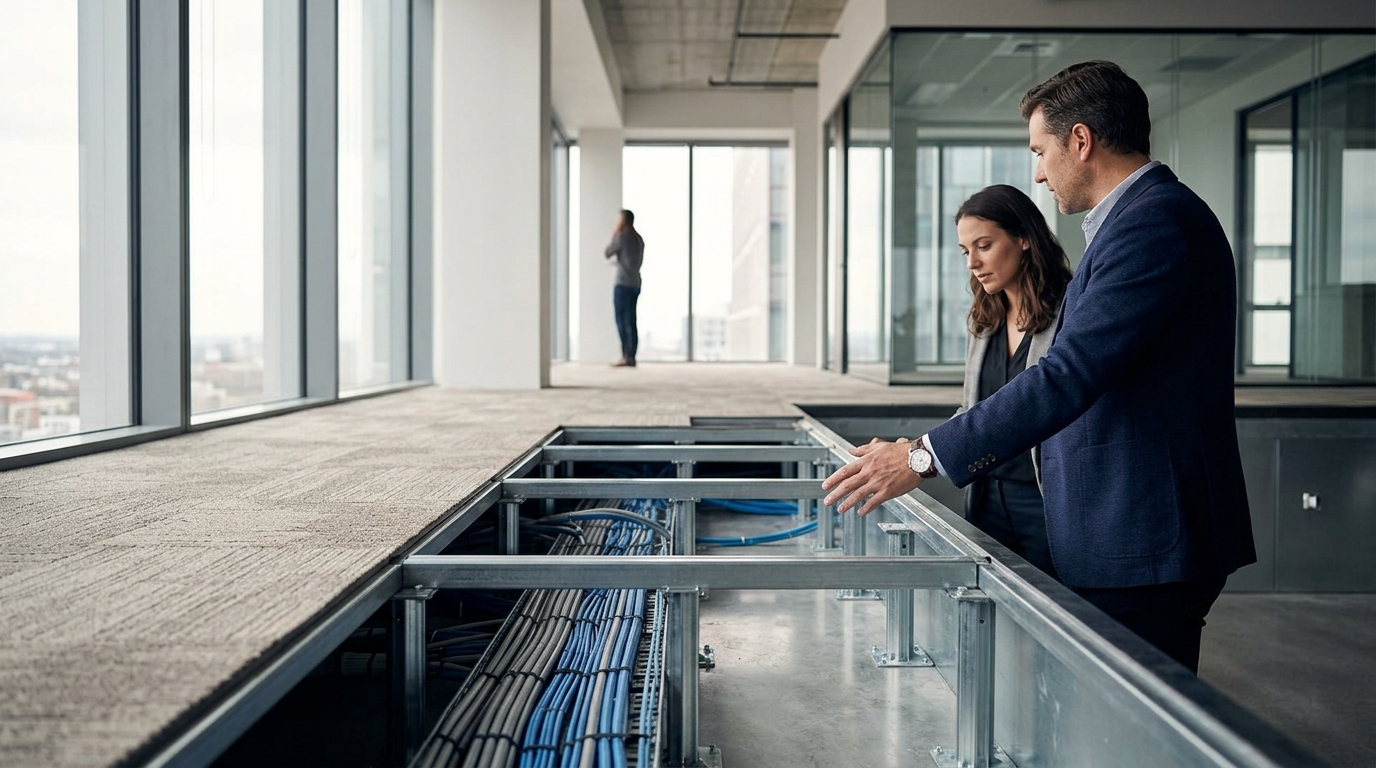
Access flooring is a specialized construction method that creates a raised floor system above the building's structural concrete slab. This elevated platform generates a hidden plenum space used to route essential building services. Access flooring is an elevated floor area upon another floor, typically a concrete slab in a building. This design allows for the seamless integration of power cables, data lines, telecommunications, HVAC ducting, and fire suppression systems without disrupting the workspace above.
Unlike traditional flooring, which sits directly on the subfloor, access flooring is modular. It consists of pedestals and stringers that support removable panels. This modularity is the key differentiator. It allows facility managers to lift individual tiles to access the infrastructure below. This capability is vital in environments where technology changes frequently, such as data centers, call centers, and modern corporate offices.
For more details on the specific ranges available, including the Solid Feel and LF series, you can explore our Access Flooring solutions. These systems are designed to meet rigorous load-bearing standards while maintaining a sleek, professional aesthetic.
Structural Differences Explained
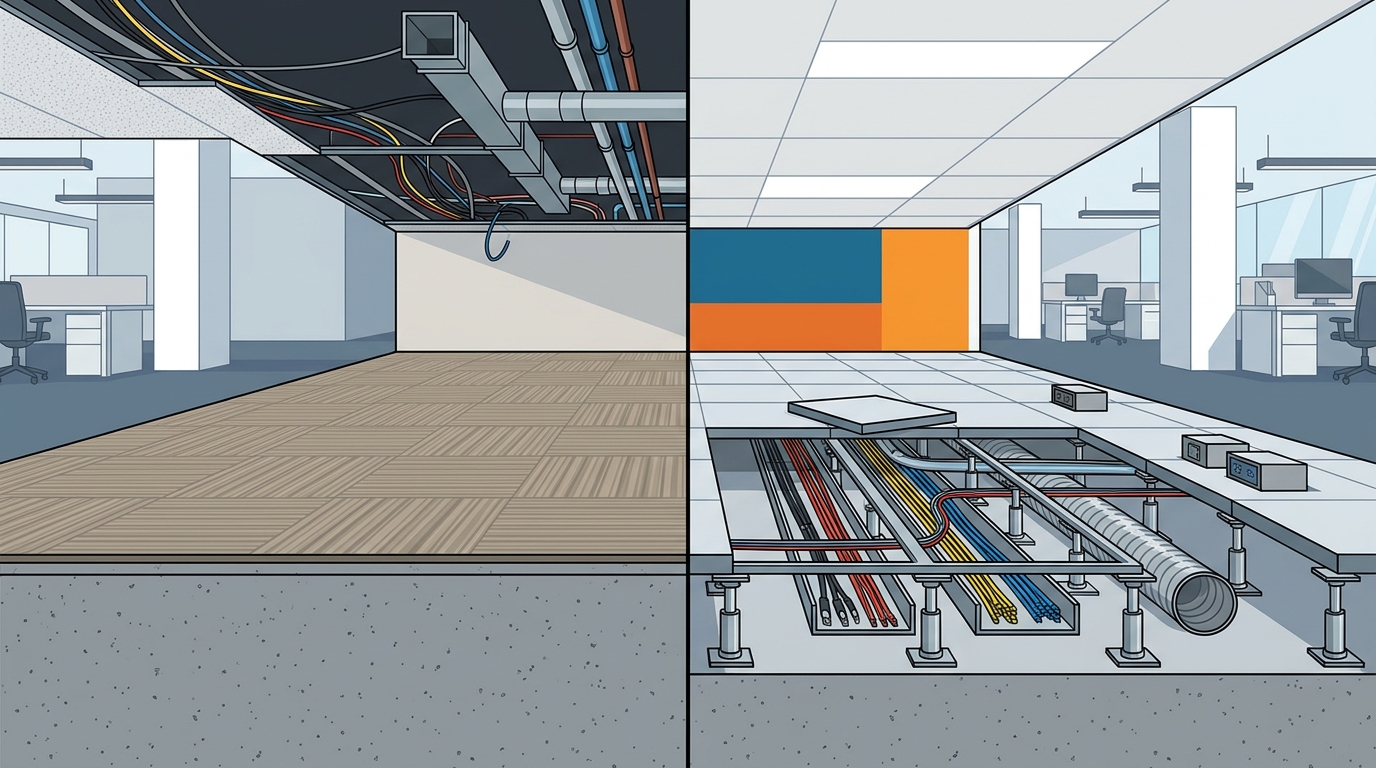
The primary distinction lies in the physical construction. Traditional flooring, whether it is vinyl, carpet, or hardwood, is a surface-level installation. It provides comfort and aesthetics but offers no utility for building services. Access flooring, by contrast, is a structural component of the building's infrastructure.
The Plenum Advantage
The space between the raised floor and the concrete slab is known as the plenum. This area serves multiple functions. It acts as a return air plenum for HVAC systems, allowing conditioned air to flow evenly throughout the room. It also houses the complex web of cabling that powers modern operations. In traditional setups, cabling must be run through walls or ceilings, which limits flexibility and increases installation complexity.
Load Bearing and Stability
Access flooring systems are engineered to support significant weight. They are tested for static and dynamic loads, ensuring they can handle heavy server racks, office furniture, and foot traffic. Traditional flooring materials vary widely in durability. While high-quality hard surfaces are durable, they do not provide the structural integrity required for heavy industrial or data center applications.
If you are considering the structural requirements for your next project, review our About PentaFloor page to understand our manufacturing capabilities and quality standards.
Maintenance and Underfloor Access
Maintenance is a critical factor in flooring selection. Traditional flooring often requires extensive disruption to repair underlying issues. If a pipe leaks under a traditional carpet tile installation, the entire section may need to be removed, dried, and replaced. This process is time-consuming and costly.
Access flooring simplifies this process dramatically. The removable panels allow technicians to access the plenum instantly. This feature is essential for minimizing downtime in high-stakes environments. Removable access floor panels make it fast and easy to reach these underfloor systems for maintenance purposes.
Churn and Reconfiguration
In the corporate world, office layouts change frequently. This is known as churn. Traditional flooring makes reconfiguration difficult. Cutting and resealing carpet or vinyl tiles leaves visible seams and damage. Access flooring allows for easy re-routing of services. You can lift the panels, move the cables, and replace the tiles without leaving a trace.
This flexibility reduces long-term operational costs. According to industry data, buildings with raised access floors can reduce reconfiguration costs by up to 30% compared to traditional setups. This efficiency is a major driver for the adoption of access flooring in dynamic workspaces.
Cost Analysis: Initial vs. Lifecycle
When comparing flooring options, the initial price tag is only part of the equation. Access flooring typically has a higher upfront cost than traditional flooring. However, the lifecycle cost often favors access flooring in commercial settings.
Initial Investment
Traditional flooring materials like luxury vinyl or engineered oak can be expensive, but installation is generally straightforward and quick. Access flooring requires a more complex installation process involving pedestals, stringers, and precise leveling. This labor intensity contributes to the higher initial price.
Long-Term Value
The value of access flooring emerges over time. The ability to easily upgrade technology without renovating the floor saves significant money. In data centers, the efficiency gained from underfloor cooling can reduce energy bills substantially. Additionally, the durability of access flooring systems means they often outlast traditional surfaces, reducing replacement frequency.
PentaFloor offers multiple service tiers to accommodate different budget and timeline needs. You can learn more about our 3 Tiers of Service to find the right fit for your project.
Sustainability and Pentagreen
Environmental impact is a growing concern in construction. Traditional flooring materials, particularly synthetic carpets and vinyl, can contribute to indoor air pollution and landfill waste. Access flooring systems, however, are designed for longevity and adaptability, which inherently reduces waste.
PentaFloor is committed to environmental excellence through its Pentagreen initiative. Our products are independently verified by Solid Green Consulting, South Africa’s largest dedicated green building consulting firm. This certification ensures that our flooring solutions meet high environmental standards.
Recyclability and Materials
Many access flooring components are made from steel and aluminum, which are highly recyclable. Traditional flooring often mixes materials, making recycling difficult. Furthermore, the extended lifespan of access flooring means fewer replacements over the life of the building. This reduction in material consumption is a key factor in sustainable building design.
For more information on our environmental commitments, visit our About Pentagreen page.
Comparison Summary
The following table summarizes the key differences between access flooring and traditional flooring options.
| Feature | Access Flooring | Traditional Flooring |
|---|---|---|
| Underfloor Access | Easy, modular panel removal | Difficult, requires demolition |
| Cable Management | Integrated in plenum | Run through walls/ceilings |
| HVAC Efficiency | High (underfloor cooling) | Standard (overhead only) |
| Reconfiguration Cost | Low | High |
| Initial Cost | Higher | Lower |
| Lifespan | 20+ years | 5-15 years |
Key Takeaways
- Adaptability: Access flooring allows for easy re-routing of services, reducing churn costs.
- Infrastructure: It provides a dedicated plenum for power, data, and HVAC systems.
- Maintenance: Removable panels enable instant access to underfloor utilities.
- Sustainability: PentaFloor's Pentagreen line is verified by Solid Green Consulting.
- Longevity: Access flooring systems typically outlast traditional surface options.
- Cost: Higher initial investment is offset by lower lifecycle costs.
- Expertise: PentaFloor has over 17 years of experience in this niche market.
Frequently Asked Questions
What is the main advantage of access flooring?
The main advantage is the ability to easily access and modify underfloor services like cables and HVAC ducts without disrupting the workspace.
Is access flooring more expensive than traditional flooring?
Yes, the initial installation cost is higher. However, the long-term savings from reduced maintenance and reconfiguration costs often make it more cost-effective.
Can access flooring be used in residential settings?
While primarily used in commercial and industrial settings, it can be used in high-tech homes. However, traditional flooring is more common for residential aesthetics.
How does access flooring improve HVAC efficiency?
It allows for underfloor air distribution, which cools equipment and workspaces more efficiently than traditional overhead systems.
What is the lifespan of access flooring?
With proper maintenance, access flooring systems can last 20 years or more, significantly longer than most traditional flooring options.
Does PentaFloor offer custom solutions?
Yes, PentaFloor provides custom manufacturing capabilities to meet specific design and performance requirements.
What is the Pentagreen initiative?
Pentagreen is PentaFloor's commitment to sustainability, with products verified by Solid Green Consulting for environmental excellence.
How quickly can PentaFloor deliver access flooring?
PentaFloor offers quick ship services, with some products available in six weeks or less, and others from local stock.
Contact PentaFloor
Choosing the right flooring system is a critical decision that impacts the functionality and efficiency of your building. PentaFloor, as the largest access flooring manufacturer on the African continent, offers the expertise and products to meet your needs. We provide affordable, high-quality, and flexible flooring solutions tailored to your specific requirements.
Whether you need access flooring, hard surfaces, or carpets, our team is ready to assist you. Contact us today to discuss your project and discover how our solutions can enhance your building's performance.
Get in touch with PentaFloor to schedule a consultation or request a quote.