
Commercial real estate decisions are rarely made in a vacuum. According to recent industry data, the global access flooring market is projected to grow at a significant compound annual rate through 2030, driven by the increasing demand for flexible infrastructure in modern workspaces. This growth highlights a fundamental shift in how businesses view floor systems. The choice between raised access flooring and traditional solid flooring is not merely aesthetic. It is a strategic decision impacting operational efficiency, maintenance costs, and long-term adaptability. Understanding the mechanical and functional differences is critical for facility managers and architects.
What is Access Flooring?
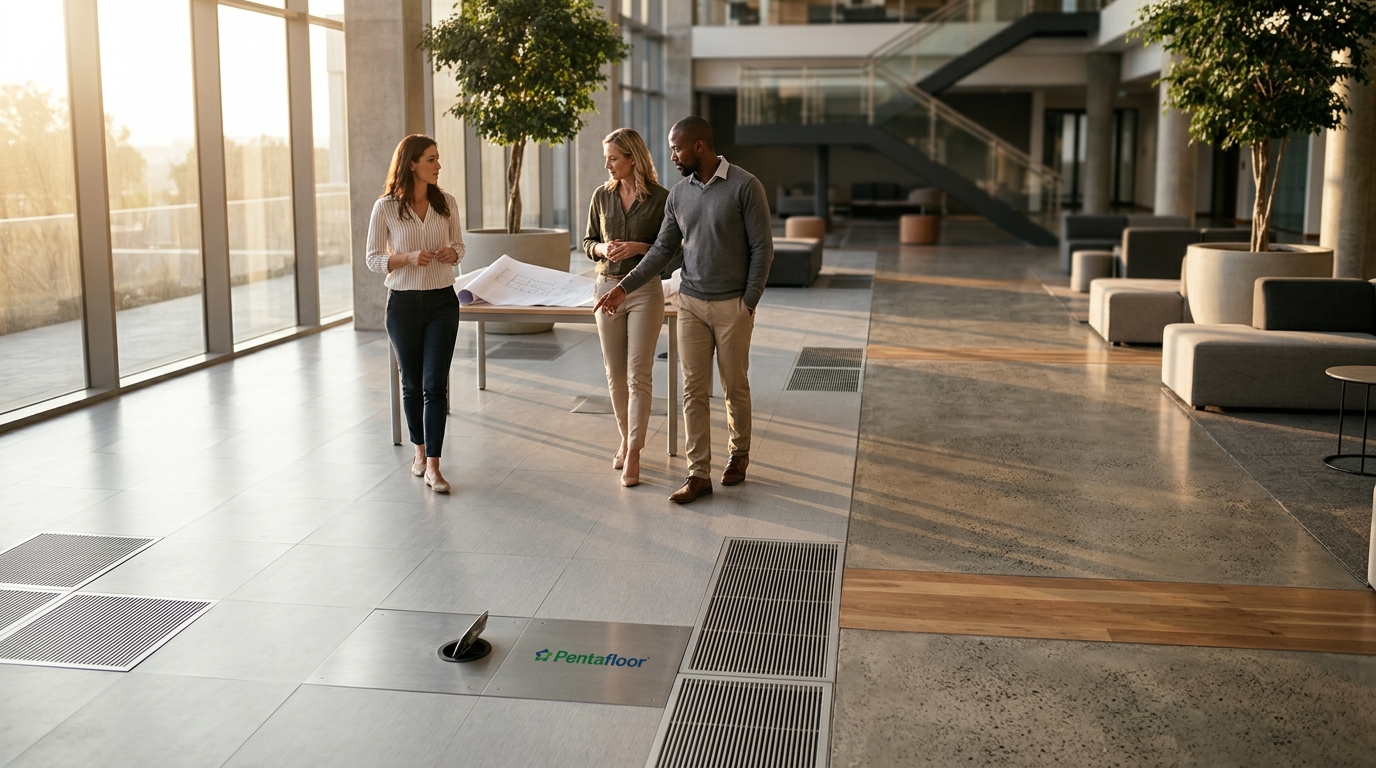
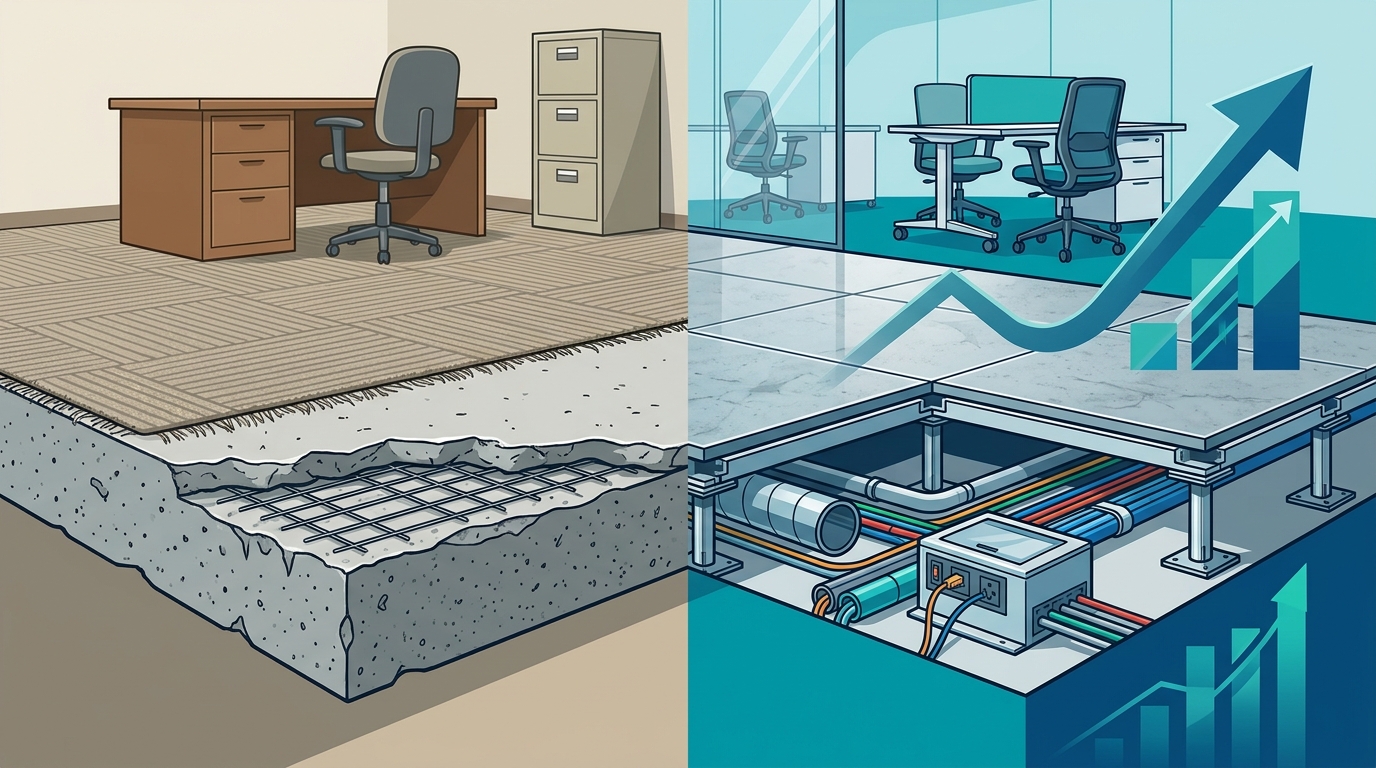
Access flooring is a specialized system designed to create a void between the structural slab and the finished floor surface. This void serves as a plenum for routing cables, data lines, and HVAC ducts. The system typically consists of pedestals, stringers, and high-density panels. PentaFloor is the largest access flooring manufacturer on the African continent, supplying affordable, high-quality, and flexible flooring solutions. Their approach emphasizes custom manufacturing capabilities coupled with an innovative product lineup. (PentaFloor ndash PentaFloor Access)
Access flooring is a modular system that allows for easy modification of the floor layout without major construction work. This modularity is essential for modern offices where technology requirements change frequently. The panels are supported by adjustable pedestals, which can be raised or lowered to accommodate different ceiling heights and load requirements. This flexibility ensures that the floor can adapt to the evolving needs of the building occupants.
The primary advantage of this system is the ease of access to the subfloor. Technicians can lift individual panels to reach cables or pipes without damaging the floor surface. This reduces downtime during maintenance and upgrades. For data centers and server rooms, this accessibility is crucial for maintaining system uptime and ensuring rapid response to technical issues.
Traditional Flooring Basics
Traditional flooring refers to solid materials installed directly onto the structural slab. This category includes hardwood, laminate, vinyl, and carpet tiles. These materials are chosen for their aesthetic appeal, comfort, and durability. Traditional flooring is often preferred for residential spaces and low-traffic commercial areas where the need for frequent infrastructure access is minimal.
Traditional flooring is a permanent installation that provides a stable and continuous surface. It does not create a void beneath the floor, which can be beneficial for thermal mass and sound insulation in certain contexts. However, it lacks the flexibility of access flooring. Any changes to the underlying infrastructure require breaking up the floor, which is costly and disruptive.
The installation of traditional flooring is generally faster and less complex than access flooring. It requires fewer specialized components and labor skills. This can result in lower initial costs for small projects. However, the long-term costs associated with maintenance and upgrades can be significantly higher. The lack of access to the subfloor means that any issues with cables or pipes must be addressed by removing the flooring entirely.
Infrastructure Management
One of the most significant differences between access flooring and traditional flooring is how they handle infrastructure. Access flooring provides a dedicated space for cables and pipes. This separation reduces clutter and improves safety. It also allows for easier identification and repair of faults. In contrast, traditional flooring buries infrastructure, making it difficult to locate and access.
Data centers rely heavily on access flooring for this reason. The ability to route cooling air through the plenum helps maintain optimal temperatures for sensitive equipment. According to industry reports, data centers using raised access flooring can achieve up to 20% better energy efficiency in cooling compared to traditional slab installations. This efficiency translates to significant cost savings over the life of the building.
For general office spaces, the flexibility of access flooring allows for reconfiguration of workspaces without major renovations. Desks and partitions can be moved easily, and new power outlets can be installed by simply lifting a panel. This adaptability is increasingly important in the era of hybrid work and dynamic office layouts. Traditional flooring cannot offer this level of agility.
Installation and Cost Analysis
The cost of access flooring is typically higher than traditional flooring. This is due to the complexity of the system and the materials used. The pedestals, stringers, and high-density panels require precise engineering and manufacturing. However, the total cost of ownership must be considered. Access flooring can reduce long-term costs by minimizing downtime during maintenance and upgrades.
Installation of access flooring requires specialized labor and equipment. The process involves leveling the pedestals and ensuring the panels are securely locked in place. This can take longer than installing traditional flooring. However, the modular nature of access flooring allows for faster installation in large spaces compared to traditional methods that require extensive preparation of the subfloor.
Traditional flooring has a lower upfront cost but higher maintenance costs. Repairs to underlying infrastructure can be expensive and time-consuming. In contrast, access flooring allows for quick and easy access to the subfloor. This reduces the need for costly demolition and reconstruction. For businesses with high technology usage, the investment in access flooring is often justified by the operational benefits.
Acoustic and Thermal Performance
Acoustic performance is a critical factor in office design. Access flooring can be designed with acoustic panels to reduce noise transmission. The void beneath the floor can also act as a sound buffer. However, if not properly installed, access flooring can create a drumming effect. Traditional flooring, particularly carpet tiles, offers good sound absorption and can help create a quieter work environment.
Thermal performance is another key consideration. Access flooring allows for underfloor air distribution, which can improve cooling efficiency. This is particularly beneficial in hot climates. Traditional flooring does not offer this capability. However, it can provide better thermal mass, helping to regulate indoor temperatures in some contexts.
The choice between the two systems depends on the specific needs of the building. For data centers and server rooms, the thermal benefits of access flooring are paramount. For general office spaces, acoustic performance may be more important. PentaFloor offers a range of products designed to meet these diverse requirements, including options for enhanced acoustic and thermal performance.
Sustainability and Environmental Impact
Sustainability is a growing concern in the construction industry. Access flooring is often considered more sustainable due to its reusability. The components can be dismantled and reused in other projects, reducing waste. Traditional flooring, particularly vinyl and laminate, can be difficult to recycle and often ends up in landfills.
PentaFloor is focused on sustainability, offering products like Pentagreen that meet high environmental standards. Their commitment to local manufacturing reduces the carbon footprint associated with transportation. This is a significant advantage in the African market, where logistics can be challenging. By producing locally, PentaFloor ensures high quality while minimizing environmental impact.
Traditional flooring materials vary in their environmental impact. Hardwood is renewable but can be expensive. Carpet tiles can be recycled, but the process is complex. Vinyl is durable but difficult to recycle. When considering sustainability, it is important to look at the entire lifecycle of the flooring system, from production to disposal.
Key Takeaways
- Access flooring provides superior flexibility for infrastructure management compared to traditional options.
- Data centers benefit significantly from the cooling efficiency of raised access flooring systems.
- PentaFloor is the largest access flooring manufacturer on the African continent, offering local manufacturing advantages.
- Traditional flooring has lower upfront costs but higher long-term maintenance expenses.
- Access flooring allows for easy reconfiguration of office spaces without major renovations.
- Sustainability is enhanced by the reusability of access flooring components.
- PentaFloor's Pentagreen line demonstrates a commitment to environmentally responsible products.
Frequently Asked Questions
Is access flooring more expensive than traditional flooring?
Yes, the initial cost of access flooring is typically higher due to the complexity of the system. However, the total cost of ownership may be lower due to reduced maintenance and upgrade costs.
Can access flooring be used in residential settings?
While possible, access flooring is primarily designed for commercial use. It is less common in residential settings due to the higher cost and specialized installation requirements.
How does PentaFloor ensure quality in its access flooring?
PentaFloor uses custom manufacturing capabilities and innovative product lines to ensure high quality. Their focus on local production allows for strict quality control.
What is the lifespan of access flooring?
Access flooring can last for decades if properly maintained. The modular nature of the system allows for individual components to be replaced as needed.
Does access flooring improve energy efficiency?
Yes, particularly in data centers. The ability to route cooling air through the plenum can significantly improve energy efficiency.
Is access flooring noisy?
Properly installed access flooring with acoustic panels can be very quiet. However, poor installation can lead to noise issues.
What types of panels does PentaFloor offer?
PentaFloor offers a range of panels including solid feel, LF range, and FS range, catering to different load and performance requirements.
Contact PentaFloor
Choosing the right flooring system is a critical decision for any commercial project. PentaFloor offers expert guidance and high-quality products to meet your specific needs. Visit our About page to learn more about our history and mission. Explore our Access Flooring solutions to find the perfect fit for your project. For more information on our sustainable options, check out our Pentagreen line. Contact us today to schedule a consultation and discover how we can help you build a more flexible and efficient workspace.