
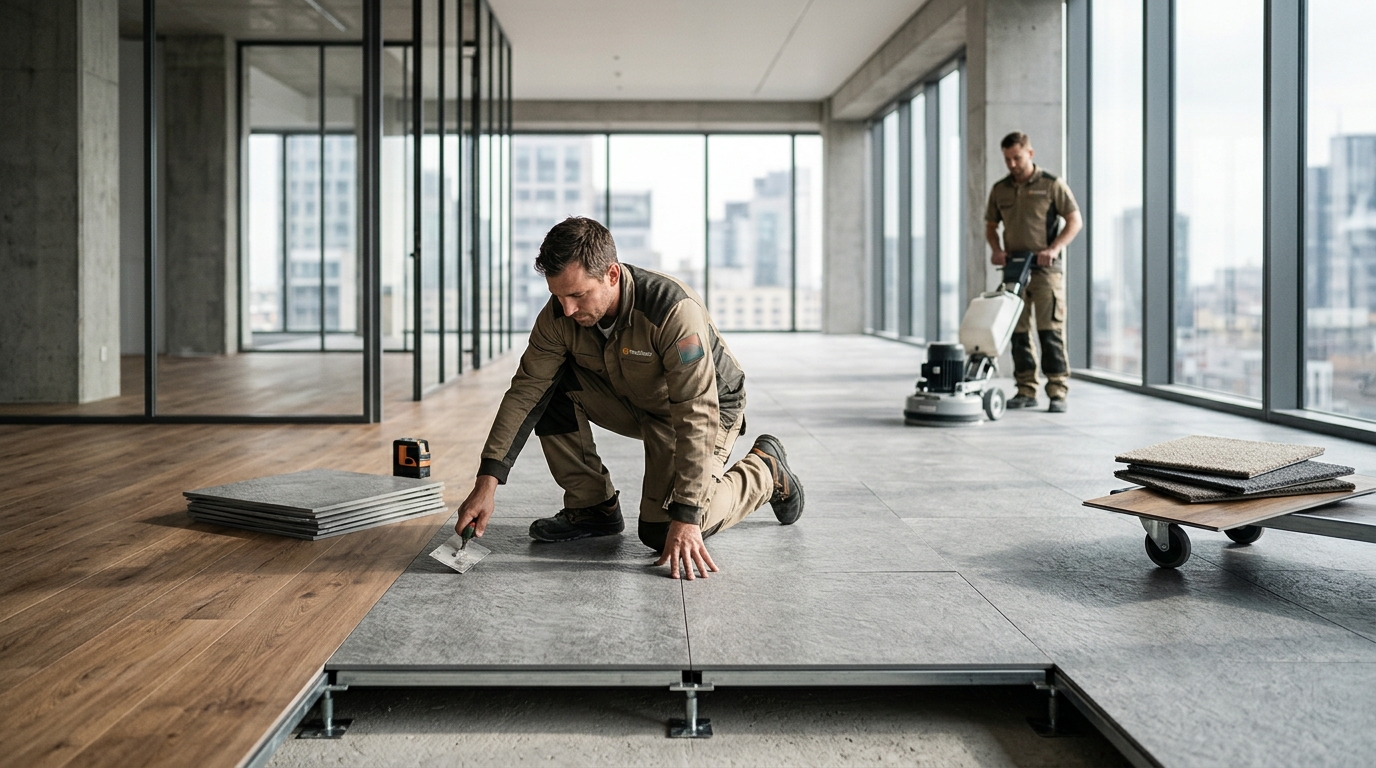
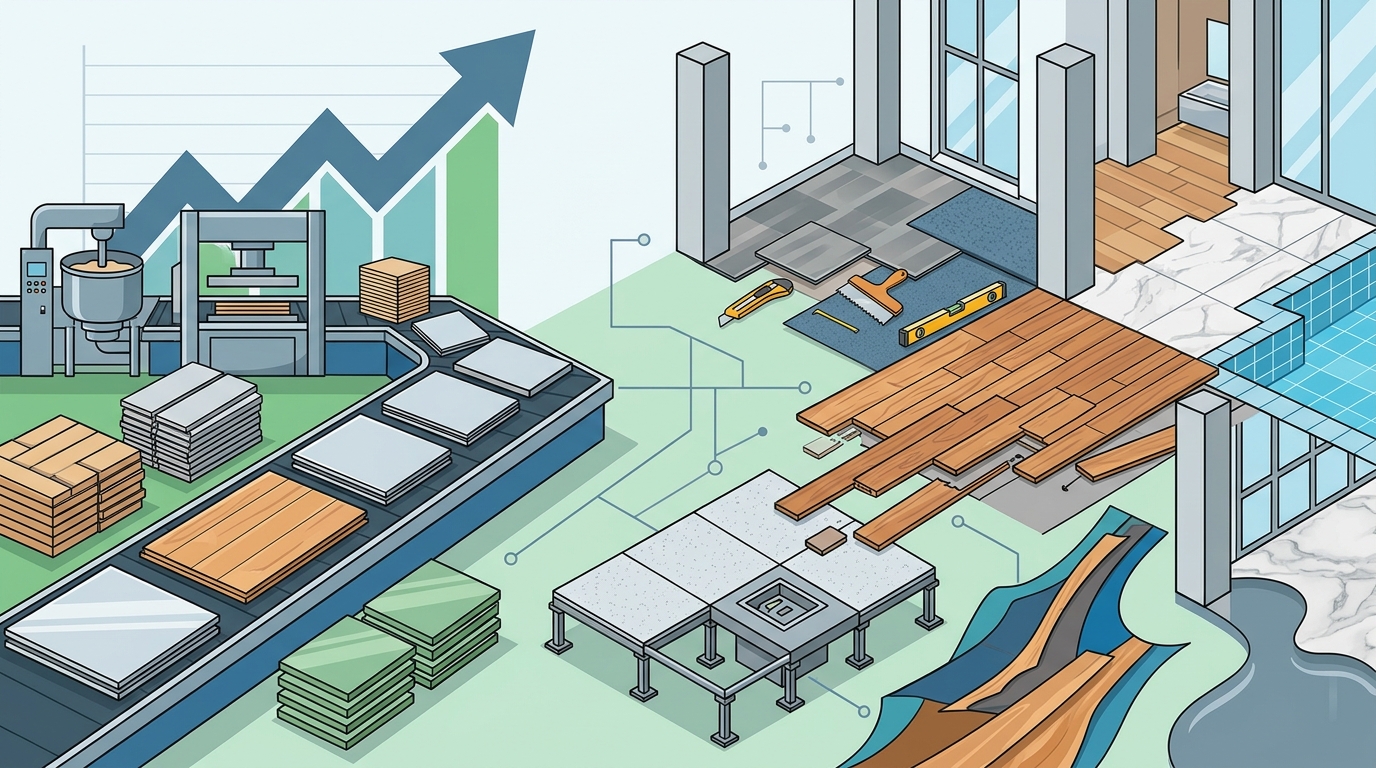
The commercial and residential flooring industry is undergoing a significant structural shift. According to recent market analysis, the global commercial flooring market is projected to expand at a compound annual growth rate of over 4% through 2030. This growth is not merely driven by new construction but by a fundamental change in how projects are procured. Building owners and facility managers are increasingly rejecting fragmented supply chains in favor of integrated partners who can guarantee consistency from the factory floor to the final nail. This model, often referred to as end-to-end flooring management, eliminates the traditional friction between manufacturing specifications and on-site installation realities.
What Is Integrated Flooring Management?
Traditional flooring procurement is a disjointed process. A project manager selects a product from a catalog, orders it from a distributor, and then hires a separate contractor to install it. When issues arise, such as color variance, material defects, or installation errors, blame is shifted between the supplier and the installer. This fragmentation leads to delayed timelines, increased costs, and compromised quality. (PentaFloor ndash PentaFloor Access)
Integrated flooring management is a holistic service model where a single entity oversees the entire lifecycle of the flooring project. This includes the initial consultation, custom manufacturing, logistics, and professional installation. By consolidating these functions, the provider assumes full accountability for the final outcome. This approach ensures that the product installed is exactly what was specified, manufactured to the correct tolerances, and laid by technicians who understand the specific material properties.
Access flooring is a prime example of this necessity. Access flooring is a raised floor system that creates a void between the structural slab and the finished floor, allowing for the routing of electrical and data cables. Because these systems require precise leveling and load-bearing accuracy, the margin for error during installation is virtually zero. A manufacturer who also installs their own products can guarantee that the modular components fit together seamlessly, reducing the risk of trip hazards or structural instability.
Benefits of Direct Manufacturer Partnerships
Choosing a provider that handles both manufacturing and installation offers distinct advantages for large-scale commercial projects. The primary benefit is accountability. When one company is responsible for the entire chain, there is no ambiguity regarding warranty claims or defect resolution. This streamlined communication channel significantly reduces the administrative burden on facility managers.
Enhanced Quality Control
When the installer is also the manufacturer, quality control becomes a continuous process rather than a final inspection step. The manufacturing team can provide direct technical support to the installation crew, addressing any site-specific challenges in real time. This is particularly crucial for custom flooring solutions where material behavior can vary based on environmental conditions.
Accelerated Project Timelines
Supply chain disruptions are a common cause of construction delays. By managing the production and delivery internally, integrated providers can prioritize critical projects and adjust production schedules dynamically. This agility ensures that materials arrive on-site exactly when needed, preventing costly downtime for contractors and allowing the building to open on schedule.
Cost Predictability
Fragmented procurement often leads to hidden costs. Additional fees for third-party logistics, separate warranty registrations, and rework due to installation errors can inflate the final budget. An integrated model provides a single, transparent quote that covers all aspects of the project. This financial clarity allows for more accurate budgeting and reduces the risk of unexpected expenditures.
The PentaFloor Integrated Solution
PentaFloor stands out in the African market as a leader in this integrated approach. As the largest access flooring manufacturer on the continent, PentaFloor combines local manufacturing capabilities with expert installation services. This dual capability ensures that every project, from small office fit-outs to large corporate headquarters, benefits from direct oversight.
PentaFloor's commitment to sustainability is evident in its Pentagreen initiative. This framework ensures that flooring solutions are not only durable and high-performing but also environmentally responsible. By manufacturing locally, PentaFloor reduces the carbon footprint associated with long-distance shipping, aligning with global trends toward sustainable construction practices. According to industry reports, sustainable building materials are becoming a key requirement for modern commercial developments.
The company's product range includes Solid Feel, LF Range, and FS Range access flooring systems. Each of these lines is designed to meet specific load-bearing and acoustic requirements. The LF Range, for instance, is engineered for high-traffic areas where durability is paramount. The FS Range offers flexibility for spaces that require frequent reconfiguration of IT infrastructure. By controlling the manufacturing process, PentaFloor can ensure that these specific performance metrics are met consistently across all batches.
Comparing Service Models
Understanding the differences between various procurement models helps decision-makers choose the right partner for their needs. The table below outlines the key distinctions between traditional fragmented procurement and integrated manufacturer-led solutions.
| Feature | Traditional Fragmented Model | Integrated Manufacturer Model |
|---|---|---|
| Accountability | Shared between supplier and installer | Sole responsibility of one provider |
| Warranty Claims | Complex, often disputed | Straightforward, single point of contact |
| Lead Times | Unpredictable due to supply chain gaps | Optimized through direct production control |
| Technical Support | Indirect, delayed response | Direct, real-time manufacturer expertise |
| Cost Structure | Multiple invoices and hidden fees | Transparent, all-inclusive pricing |
For projects requiring specialized flooring solutions, such as luxury vinyl or engineered oak, the benefits of integration are even more pronounced. These materials require precise subfloor preparation and specific installation techniques. A manufacturer who understands the material science behind their products can provide installation teams with the necessary training and guidance to ensure optimal performance.
Key Takeaways
- Integrated flooring management consolidates manufacturing and installation under one roof, ensuring single-point accountability.
- PentaFloor is the largest access flooring manufacturer on the African continent, offering both production and installation services.
- Direct manufacturer partnerships reduce lead times by eliminating supply chain intermediaries and logistical delays.
- Quality control is enhanced when the installer has direct access to manufacturing engineers for technical support.
- Sustainable practices, such as local manufacturing, are increasingly important for commercial building certifications.
- Warranty claims are resolved faster when there is no ambiguity between supplier and installer responsibilities.
- PentaFloor's Pentagreen initiative highlights a commitment to environmentally responsible flooring solutions.
Frequently Asked Questions
What is the advantage of buying from a manufacturer who also installs?
The primary advantage is accountability. When one company manufactures and installs the flooring, there is no dispute over defects or installation errors. This streamlines warranty claims and ensures that the final product meets the original specifications.
Does PentaFloor offer custom manufacturing for large projects?
Yes, PentaFloor provides custom manufacturing capabilities tailored to specific project requirements. This includes custom sizes, colors, and load-bearing specifications for access flooring and hard surfaces.
How does local manufacturing impact project timelines?
Local manufacturing significantly reduces lead times by eliminating the need for international shipping and customs clearance. This allows for faster delivery and installation, which is critical for time-sensitive commercial projects.
What types of flooring does PentaFloor specialize in?
PentaFloor specializes in access flooring, including the Solid Feel, LF Range, and FS Range. They also offer hard surfaces, luxury vinyl, engineered oak, carpets, and ceramic tiles.
Is PentaFloor's flooring environmentally sustainable?
Yes, PentaFloor is focused on sustainability through its Pentagreen initiative. This includes using eco-friendly materials and manufacturing processes that minimize environmental impact.
Can I get a quote for both supply and installation?
Absolutely. PentaFloor provides comprehensive quotes that cover both the supply of materials and the professional installation services, ensuring transparent pricing for the entire project.
What is access flooring and where is it used?
Access flooring is a raised floor system that creates a void for routing cables and pipes. It is commonly used in data centers, offices, and commercial buildings where flexible infrastructure is required.
Contact PentaFloor
Ready to streamline your next flooring project? Partner with a provider that understands the entire process from start to finish. Contact PentaFloor today to discuss your requirements and receive a tailored proposal for supply and installation services.
Visit our About page to learn more about our history and capabilities. Explore our Access Flooring solutions or view our Awards to see the recognition we have received for quality and innovation.