
Modern commercial infrastructure demands flooring that does more than just cover a subfloor. According to industry data, the global access flooring market is projected to grow significantly through 2026, driven by the need for flexible, high-density cabling in tech-heavy environments. This shift highlights a critical divergence between raised access systems and conventional fixed flooring. Understanding these differences is essential for facility managers and architects who must balance aesthetic requirements with functional infrastructure needs.
What Is Access Flooring?
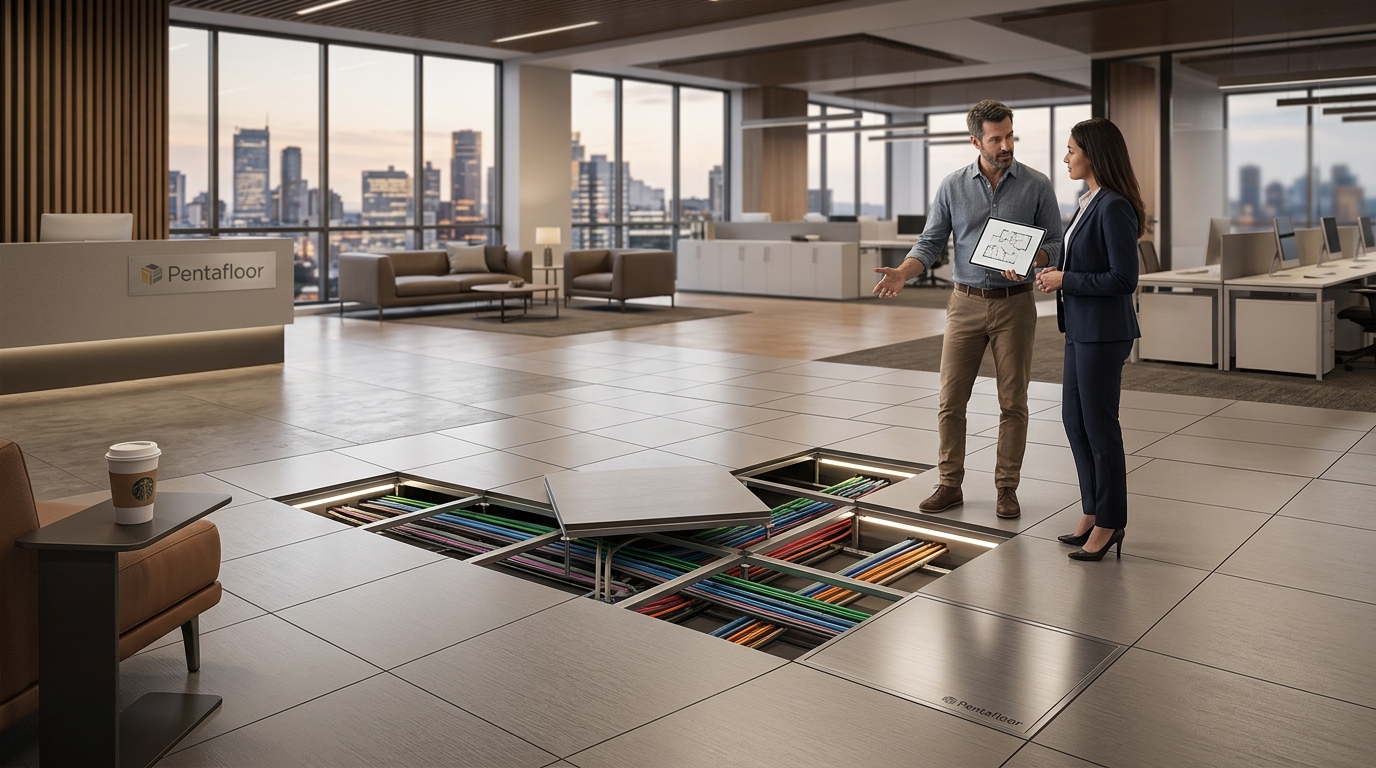
Access flooring is a specialized system designed to create a void between the structural subfloor and the finished floor surface. This void serves as a plenum for routing electrical, data, and HVAC infrastructure. Unlike traditional methods where cables are buried in concrete or run along walls, access flooring allows for complete reconfiguration of building services without destructive demolition.
PentaFloor is the largest access flooring manufacturer on the African continent, providing custom manufacturing capabilities that cater to the specific structural demands of modern commercial buildings. Their product lines, such as the Solid Feel and LF Range, are engineered to support heavy loads while maintaining a sleek, professional aesthetic. This system is particularly prevalent in data centers, server rooms, and open-plan offices where technology density is high.
The core advantage lies in adaptability. As technology evolves, the need for additional power outlets or network drops increases. With access flooring, these changes are executed by simply lifting tiles and rerouting cables. This flexibility reduces downtime and operational disruption, making it a preferred choice for dynamic workspaces. For more details on their specific product ranges, you can explore their Access Flooring solutions.
Traditional Flooring Basics
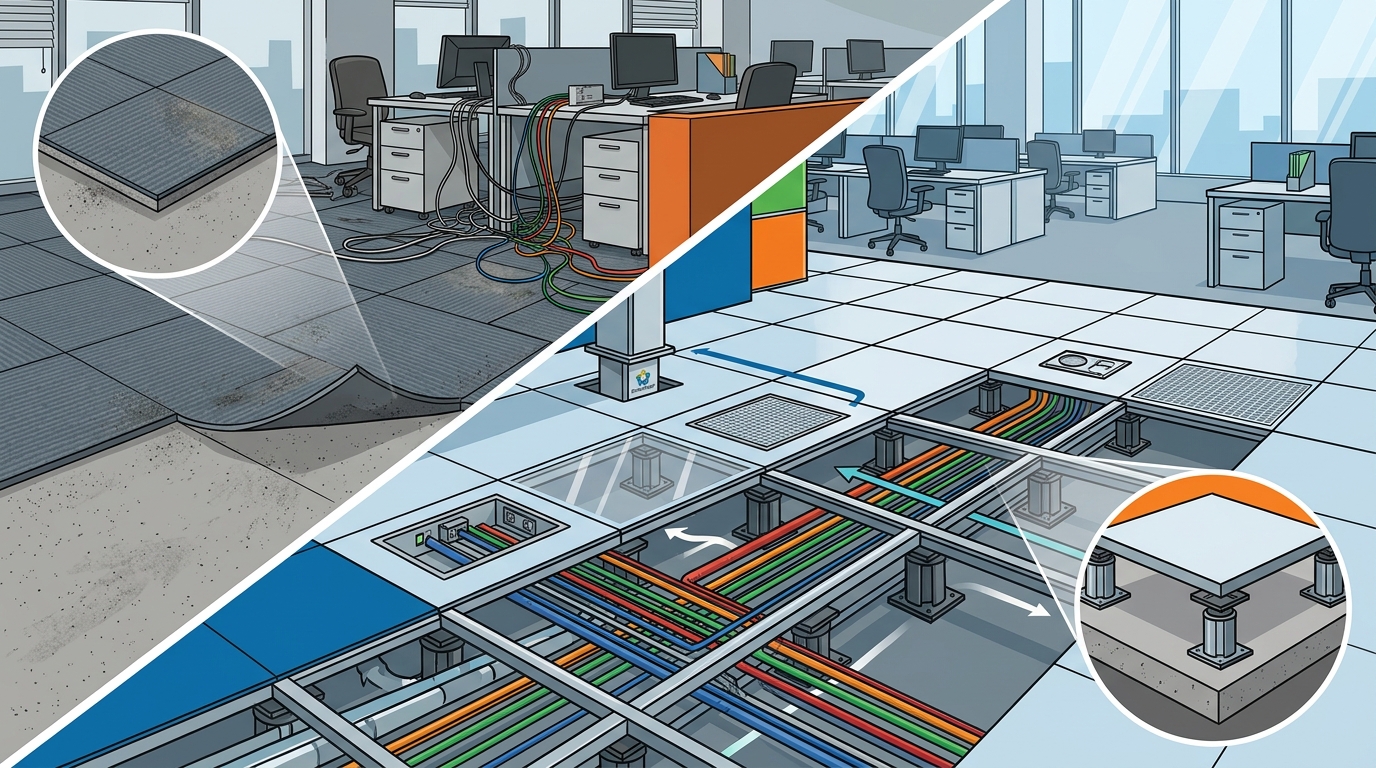
Traditional flooring encompasses a wide array of materials including hardwood, laminate, vinyl, and carpet tiles that are installed directly onto the subfloor. These systems are designed for permanence and aesthetic continuity. They do not create a void for infrastructure, meaning all wiring must be concealed within walls, ceilings, or underfloor conduits during the initial construction phase.
While traditional options offer a warm, residential feel, they lack the modularity of raised systems. If a pipe bursts or a network cable fails, accessing the issue often requires breaking up the floor surface. This makes traditional flooring less suitable for environments where frequent infrastructure changes are anticipated. However, for static environments like retail stores or residential homes, traditional flooring remains the standard due to its lower initial complexity.
PentaFloor also offers a comprehensive range of Hard Surfaces and Luxury Vinyl options for clients who prefer the look and feel of conventional flooring but still require high durability and design flexibility. These products bridge the gap between aesthetic preference and functional performance.
Installation and Maintenance Dynamics
The installation process for access flooring is fundamentally different from traditional methods. Access floors are installed on adjustable pedestals, allowing for precise leveling and height adjustment. This method is faster for large commercial spaces because it does not require the curing time associated with concrete screeds. Furthermore, the modular nature of the tiles allows for easy removal and replacement if damaged.
Maintenance of access flooring is streamlined. Technicians can access the plenum space to inspect HVAC ducts or network cabling without disturbing the finished floor. This is a significant operational advantage. In contrast, maintaining traditional flooring often involves surface cleaning and periodic refinishing or replacement of worn sections, which can be costly and disruptive.
For projects requiring sustainable solutions, PentaFloor’s PentaGreen initiative highlights their commitment to environmentally friendly manufacturing processes. This includes using recycled materials and energy-efficient production methods, which is a growing consideration for modern construction projects.
Cost Analysis: Long-Term Value
When comparing costs, it is crucial to look beyond the initial material price. Access flooring typically has a higher upfront cost due to the need for pedestals, stringers, and specialized tiles. However, the total cost of ownership (TCO) often favors access flooring in commercial settings. The ability to reconfigure the space quickly and cheaply saves significant labor costs over the building's lifecycle.
Traditional flooring may appear cheaper initially, but the cost of future renovations can be prohibitive. If a business needs to expand its IT infrastructure, retrofitting a traditional floor can involve breaking and repairing concrete, which is both expensive and time-consuming. Access flooring eliminates this risk by providing inherent flexibility.
According to market analysis, the efficiency gains from reduced downtime in tech-heavy industries can offset the initial investment in access flooring within a few years. This makes it a financially sound decision for long-term commercial leases and corporate headquarters. You can view current project examples and case studies on their Projects page to see real-world applications.
Acoustic and Climate Performance
Acoustic performance is a critical factor in office design. Access flooring systems can be engineered with high-density cores and acoustic underlays to minimize sound transmission between floors. This is particularly important in multi-story buildings where noise control is essential for productivity.
Traditional flooring also offers good acoustic properties, especially carpet tiles, but they do not address the issue of sound traveling through the plenum space. Access flooring allows for the installation of insulation and sound-absorbing materials in the void, creating a more controlled acoustic environment.
Climate control is another area where access flooring excels. The plenum space can be used as a return air plenum for HVAC systems, allowing for efficient distribution of conditioned air. This method is more energy-efficient than traditional overhead ducting, as it reduces the distance air must travel to reach occupants. For more information on their sustainable practices, visit the PentaGreen section.
Comparison Summary
| Feature | Access Flooring | Traditional Flooring |
|---|---|---|
| Infrastructure Access | High. Easy access to cables and pipes. | Low. Requires demolition for access. |
| Flexibility | High. Modular and reconfigurable. | Low. Fixed installation. |
| Installation Speed | Fast. No curing time required. | Slower. Depends on material and method. |
| Maintenance Cost | Lower long-term. Easy component replacement. | Higher long-term. Complex repairs. |
| Aesthetic Variety | Good. Can mimic wood, stone, or carpet. | Excellent. Wide range of natural materials. |
| Best For | Data centers, offices, tech hubs. | Residential, retail, static offices. |
Key Takeaways
- Infrastructure Flexibility: Access flooring allows for easy modification of electrical and data lines, reducing renovation costs.
- Market Growth: The demand for access flooring is rising due to the increasing density of technology in commercial spaces.
- Local Manufacturing: PentaFloor manufactures locally in Johannesburg, ensuring quality control and faster delivery times.
- Sustainability: PentaGreen initiatives focus on reducing the environmental impact of flooring production.
- Acoustic Control: Access systems can be enhanced with insulation for better noise management in open offices.
- HVAC Efficiency: The plenum space can be used for air distribution, improving energy efficiency.
- Brand Authority: With over 17 years of experience, PentaFloor is a trusted leader in African flooring solutions.
Frequently Asked Questions
Is access flooring suitable for residential use?
While primarily designed for commercial use, access flooring can be used in high-tech residential projects. However, traditional flooring is more common due to cost and aesthetic preferences.
How does PentaFloor ensure quality in their access flooring?
PentaFloor is the largest access flooring manufacturer on the African continent, utilizing custom manufacturing capabilities and rigorous quality control processes to ensure durability and performance.
What is the lifespan of access flooring?
With proper maintenance, access flooring systems can last for decades. The modular nature allows for individual tile replacement, extending the overall system life significantly.
Can access flooring support heavy equipment?
Yes, PentaFloor offers heavy-duty access flooring options designed to support server racks and other heavy IT equipment. Their Solid Feel range is particularly noted for its load-bearing capacity.
How does access flooring impact HVAC efficiency?
Access flooring can improve HVAC efficiency by allowing conditioned air to be distributed through the plenum space, reducing the need for extensive overhead ductwork.
What types of finishes are available for access flooring?
Access flooring can be finished with carpet tiles, vinyl, laminate, or high-pressure laminate to mimic wood or stone. PentaFloor offers a variety of Hard Surfaces to match any design scheme.
Where is PentaFloor located?
PentaFloor is located at 1 Sturdee Avenue, Rosebank, Johannesburg, 2196. They serve clients across the African continent with local manufacturing and support.
Contact PentaFloor
Choosing the right flooring system is a critical decision that impacts the functionality and longevity of your building. Whether you require the flexibility of access flooring or the aesthetic appeal of traditional options, PentaFloor provides expert guidance and high-quality products. For more information on their services, visit the About page or explore their Awards to see their industry recognition.
To discuss your specific project requirements, please contact PentaFloor directly. Their team of experts is ready to assist you in selecting the perfect flooring solution for your needs. You can reach them via their Contact page or by visiting their office in Rosebank, Johannesburg.