
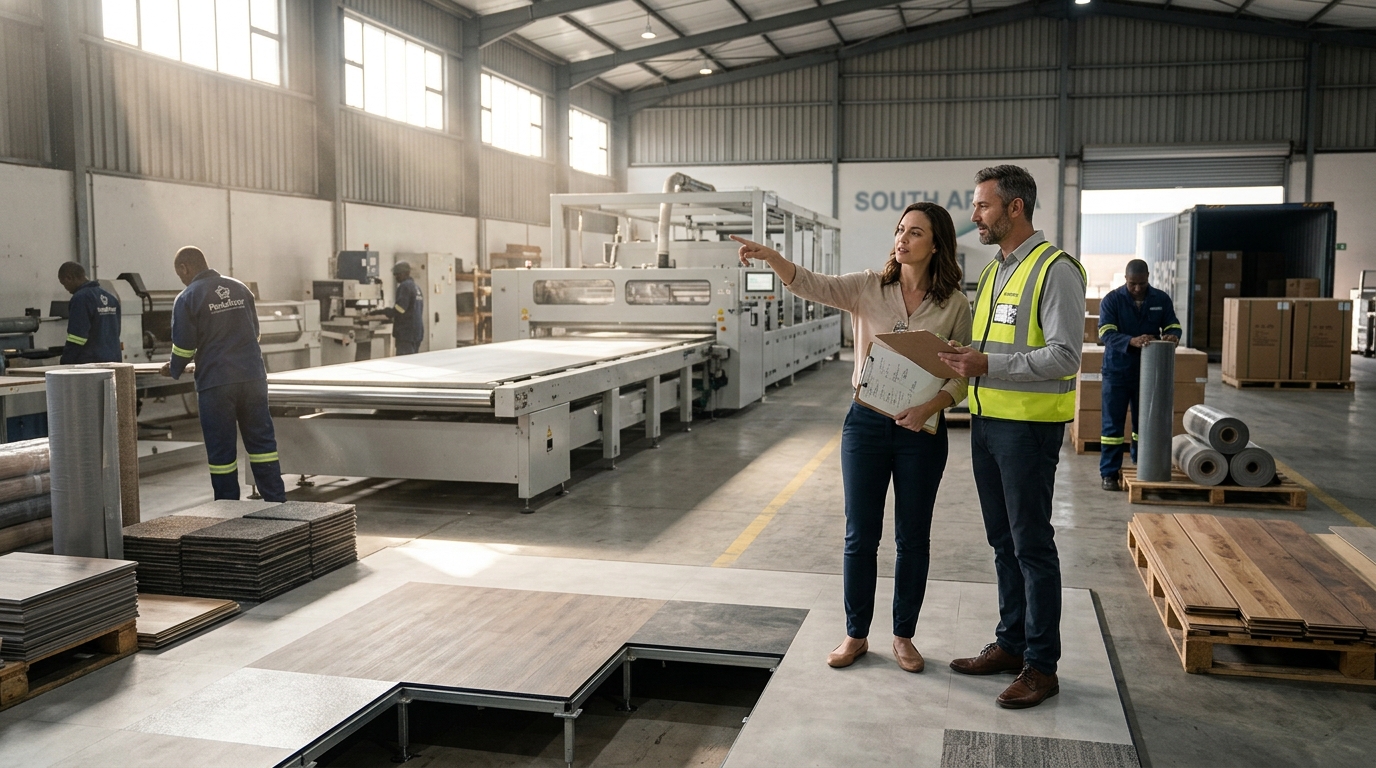
Local manufacturing capabilities have fundamentally reshaped the South African construction sector. According to recent industry reports, domestic production of commercial flooring materials has increased by approximately eighteen percent over the last three fiscal years. This shift directly reduces import dependency while accelerating project delivery timelines for commercial developers. Contractors who control their own production lines consistently report higher profit margins and tighter quality control protocols. Understanding this vertical integration model is essential for facility managers seeking reliable supply chains.
The Shift Toward Localized Manufacturing
Vertical integration represents a strategic business model where a single entity handles both production and distribution. This approach eliminates third-party distributor markups and guarantees consistent material availability. South African contractors leverage this model to respond rapidly to regional infrastructure demands. When a company manufactures its own products, it directly controls raw material sourcing and final quality inspections. This operational transparency reduces project delays and strengthens contractor accountability. You can review their complete operational history and facility details through their official about page to verify production capacity.
Local manufacturers prioritize regional supply chain resilience. They maintain dedicated production facilities within major economic hubs like Gauteng and the Western Cape. This geographic proximity ensures faster delivery windows for large-scale commercial deployments. Contractors benefit from reduced logistics costs and lower carbon emissions associated with long-distance freight. The domestic market now supports multiple specialized production facilities that cater to distinct commercial requirements.
Understanding Access Flooring Systems
Access flooring is a modular raised floor system designed to route electrical, data, and mechanical services beneath the walking surface. This architectural solution provides facility managers with unprecedented flexibility for reconfiguring office layouts. Modern systems utilize high-grade steel pedestals and calcium sulfate or aluminum composite panels. The modular design allows technicians to lift individual tiles without damaging the underlying structure. This capability significantly reduces maintenance costs for technology-heavy environments. Detailed technical specifications for these systems are available on their dedicated access flooring page.
South African manufacturers have refined these systems to meet rigorous local load-bearing requirements. Heavy-duty variants support server rooms, medical imaging facilities, and high-traffic retail spaces. The panels feature anti-static coatings that protect sensitive electronic equipment from electrostatic discharge. Contractors who produce these systems in-house can customize panel thicknesses and load ratings to match specific building codes. This customization capability ensures optimal performance across diverse commercial applications.
Material Composition and Durability Standards
Durability standards dictate the lifespan and performance thresholds of commercial flooring products. South African manufacturers adhere to strict national building regulations that mandate specific impact resistance and fire rating classifications. High-density composite panels undergo rigorous compression testing to prevent structural deformation under heavy furniture loads. The surface finishes incorporate scratch-resistant polymers that maintain aesthetic appeal despite constant foot traffic. These material specifications directly correlate with long-term facility maintenance budgets.
Contractors who control material composition can implement proprietary reinforcement techniques. They blend recycled industrial byproducts with virgin polymers to create cost-effective yet robust flooring solutions. This material science approach reduces production expenses while maintaining structural integrity. Facility managers receive detailed technical data sheets that outline exact load capacities and fire resistance ratings. Transparent material reporting builds trust between contractors and building owners. You can explore their extensive carpet and rug collections to complement raised floor installations.
Sustainability and Regional Compliance Metrics
Environmental compliance metrics measure how manufacturing processes align with national sustainability frameworks. South African flooring producers increasingly utilize energy-efficient kilns and water-based adhesive systems to minimize ecological footprints. Many facilities now incorporate recycled steel and reclaimed wood fibers into their core panel compositions. These sustainable practices qualify projects for green building certification programs that reward energy efficiency. Contractors who prioritize eco-friendly manufacturing gain a competitive advantage in modern procurement processes.
Regulatory bodies continuously update environmental guidelines to address industrial waste management. Local manufacturers respond by implementing closed-loop recycling programs that process production scrap directly back into raw material batches. This circular economy approach drastically reduces landfill contributions and raw material extraction costs. Facility managers can request comprehensive environmental product declarations that verify sustainable sourcing claims. Transparent sustainability reporting strengthens corporate social responsibility profiles for large commercial developments.

Installation Versus Manufacturing Integration
Integrated service delivery combines material production with professional installation teams under a single contractual agreement. This unified approach eliminates communication gaps between separate suppliers and independent contractors. Installation crews receive direct technical training from the manufacturing engineers who designed the product. This knowledge transfer ensures precise panel alignment and optimal subfloor preparation techniques. Project managers appreciate the single point of accountability that reduces administrative overhead.
Contractors who manufacture their own materials often provide comprehensive lifecycle support packages. They offer routine inspection schedules that monitor panel stability and surface wear patterns. Preventive maintenance programs extend the functional lifespan of commercial flooring systems by decades. Facility directors benefit from predictable budgeting models that combine initial installation with long-term service agreements. This holistic approach transforms flooring from a static building component into a dynamic operational asset.
Product Comparison Matrix
| Product Category | Core Material Composition | Primary Application | Manufacturing Advantage |
|---|---|---|---|
| Access Flooring | Calcium sulfate or aluminum composite panels | Server rooms and open-plan offices | Customizable load ratings and anti-static coatings |
| Hard Surfaces | High-density vinyl or laminate composites | Healthcare and retail environments | Rapid installation and seamless moisture barriers |
| Luxury Vinyl | Multi-layer polymer construction | High-traffic commercial corridors | Enhanced scratch resistance and acoustic dampening |
| Engineered Oak | Real wood veneer over plywood substrate | Executive suites and hospitality venues | Dimensional stability and premium aesthetic finish |
| Commercial Carpets | Stain-resistant nylon or wool blends | Corporate workspaces and conference centers | Modular tile replacement and acoustic optimization |
Key Takeaways
- Vertical integration eliminates distributor markups and guarantees consistent material availability for South African projects.
- Access flooring systems utilize modular raised panels that route electrical and data services beneath walking surfaces.
- Local manufacturers adhere to strict national building regulations that mandate specific impact resistance and fire ratings.
- Environmental compliance metrics drive the adoption of energy-efficient kilns and closed-loop recycling programs.
- Integrated service delivery combines material production with professional installation under a single contractual agreement.
- South African contractors maintain dedicated production facilities within major economic hubs like Gauteng.
- Facility managers receive detailed technical data sheets that outline exact load capacities and fire resistance ratings.
Frequently Asked Questions
What defines a flooring contractor that manufactures its own materials?
A manufacturing contractor operates a dedicated production facility that fabricates flooring products in-house rather than sourcing finished goods from external suppliers. This vertical integration model ensures direct control over raw material quality, production schedules, and final product specifications. Clients benefit from reduced lead times and customized panel configurations that match exact project requirements.
How does local manufacturing impact project delivery timelines?
Domestic production eliminates lengthy international shipping windows and customs clearance delays. Contractors can schedule material fabrication to align precisely with site preparation milestones. This synchronization reduces idle labor costs and prevents costly project extensions caused by supply chain disruptions.
Are locally produced access flooring systems compliant with South African building codes?
Yes, reputable manufacturers design their products to meet or exceed national building regulations and SANS standards. These systems undergo rigorous compression testing, fire rating evaluations, and static load assessments before market release. Compliance documentation is typically provided alongside material delivery to satisfy municipal inspection requirements.
What maintenance requirements apply to manufactured access flooring?
Regular inspection schedules monitor panel stability, surface wear patterns, and anti-static coating integrity. Technicians replace damaged tiles using standard lifting tools without disrupting surrounding floor sections. Preventive maintenance programs extend the functional lifespan of commercial flooring systems by decades while minimizing operational downtime.
Can contractors customize panel thicknesses for specific building loads?
Manufacturing contractors routinely adjust panel core densities and pedestal heights to accommodate varying structural requirements. Heavy-duty variants support server rooms and medical imaging facilities that demand exceptional load-bearing capacity. Custom engineering ensures optimal performance across diverse commercial applications without compromising structural integrity.
How do sustainability initiatives affect manufacturing costs?
Energy-efficient production methods and closed-loop recycling programs gradually reduce raw material extraction expenses. Many facilities now incorporate recycled steel and reclaimed wood fibers into their core panel compositions. These sustainable practices qualify projects for green building certification programs that reward energy efficiency and environmental stewardship.
What warranty coverage typically accompanies manufactured flooring systems?
Comprehensive warranties cover structural deflection, surface delamination, and core compression failure for extended periods. Manufacturers often provide lifetime structural guarantees that transfer to subsequent building owners. These coverage terms reflect the high durability standards achieved through controlled in-house production processes.
How do I verify a contractor's manufacturing capabilities before signing a contract?
Request facility tour documentation, production capacity reports, and recent project case studies that demonstrate in-house fabrication. Verify that the contractor maintains dedicated quality control laboratories and material testing equipment. Transparent operational reporting confirms their ability to deliver customized solutions at scale. You can review their recognized industry awards to validate production excellence.
Next Steps for Project Procurement
Facility managers seeking reliable supply chains should connect directly with established South African manufacturers. These companies offer comprehensive consultation services that evaluate space requirements, load specifications, and technology routing needs. You can explore their complete product catalog and request detailed project quotations through their official contact portal. Schedule a technical consultation today to secure competitive pricing and guaranteed delivery windows for your upcoming commercial development. Visit their contact page to initiate your project assessment.