

Modern commercial construction demands seamless project execution. According to recent industry reports, integrated supply chains reduce project delays by nearly forty percent compared to fragmented procurement models. Facility managers increasingly prioritize vendors who control the entire lifecycle. This approach eliminates communication gaps between independent manufacturers and independent contractors. When a single entity oversees material fabrication and final installation, quality control remains consistent from the production line to the finished surface. Businesses seeking reliable infrastructure benefit from centralized accountability and streamlined scheduling.
Integrated Manufacturing Workflows
Access flooring systems require precise engineering to support heavy server racks and dynamic cable management. Custom manufacturing allows producers to adjust panel thickness and load ratings before shipping. This direct control prevents material substitutions that often occur when distributors source from third-party factories. When a company manufactures its own products, it guarantees exact specifications match architectural blueprints. The facility maintains strict environmental controls during production to prevent moisture absorption or dimensional warping.
Access flooring is a modular raised floor system designed to support heavy equipment while concealing mechanical and electrical infrastructure. Manufacturers like PentaFloor Access Flooring utilize localized production facilities to reduce transit damage and lead times. Localized production ensures that regional climate conditions do not compromise material integrity during storage. Clients receive factory-direct pricing without distributor markups. This vertical integration creates a transparent supply chain that adapts quickly to custom project requirements.
Installation Oversight Protocols
Professional installation requires specialized leveling equipment and calibrated laser alignment tools. In-house installation teams understand the exact tolerances of their own manufactured components. They avoid the common friction points that arise when external contractors encounter unfamiliar panel locking mechanisms. Direct oversight ensures that subfloor preparation meets manufacturer specifications before the first pedestal is placed. This eliminates warranty disputes and guarantees long-term structural stability.
Turnkey flooring installation is a comprehensive service model where a single contractor handles material fabrication, site preparation, and final assembly. Facility managers benefit from a single point of contact for scheduling and technical support. The installation crew follows standardized operating procedures that align with factory quality benchmarks. This unified approach reduces on-site rework and prevents costly project extensions.
Quality Assurance Standards
Regulatory compliance remains critical for commercial and industrial flooring applications. Independent testing laboratories verify load-bearing capacities and fire resistance ratings before products reach job sites. Companies that control both manufacturing and installation maintain continuous quality documentation throughout the project lifecycle. This documentation simplifies regulatory audits and accelerates building occupancy approvals. Clients receive comprehensive warranty packages that cover both material defects and workmanship errors.
Quality assurance is a systematic process that verifies product performance against established engineering specifications and safety codes. Manufacturers implement automated stress testing to identify structural weaknesses before distribution. Installation supervisors conduct final load tests to confirm system integrity under maximum operational conditions. This dual verification process protects facility owners from premature floor failure and costly downtime.
Cost Efficiency and Budget Control
Fragmented procurement models typically inflate project budgets by twenty to thirty percent due to overlapping administrative fees. Integrated management eliminates redundant contracting costs and reduces material waste through precise factory cutting. Bulk purchasing of raw components allows manufacturers to secure favorable commodity pricing. These savings transfer directly to the client without compromising material grade or structural performance. Financial transparency remains high when a single entity manages the entire budget allocation.
Comprehensive flooring procurement is a strategic purchasing approach that consolidates material acquisition, fabrication, and deployment under one contractual agreement. Facility managers gain predictable cash flow management and simplified invoicing procedures. The elimination of third-party markups preserves capital for other critical infrastructure upgrades. Long-term maintenance costs decrease because factory-trained technicians perform the initial installation.
Project Timelines and Logistics
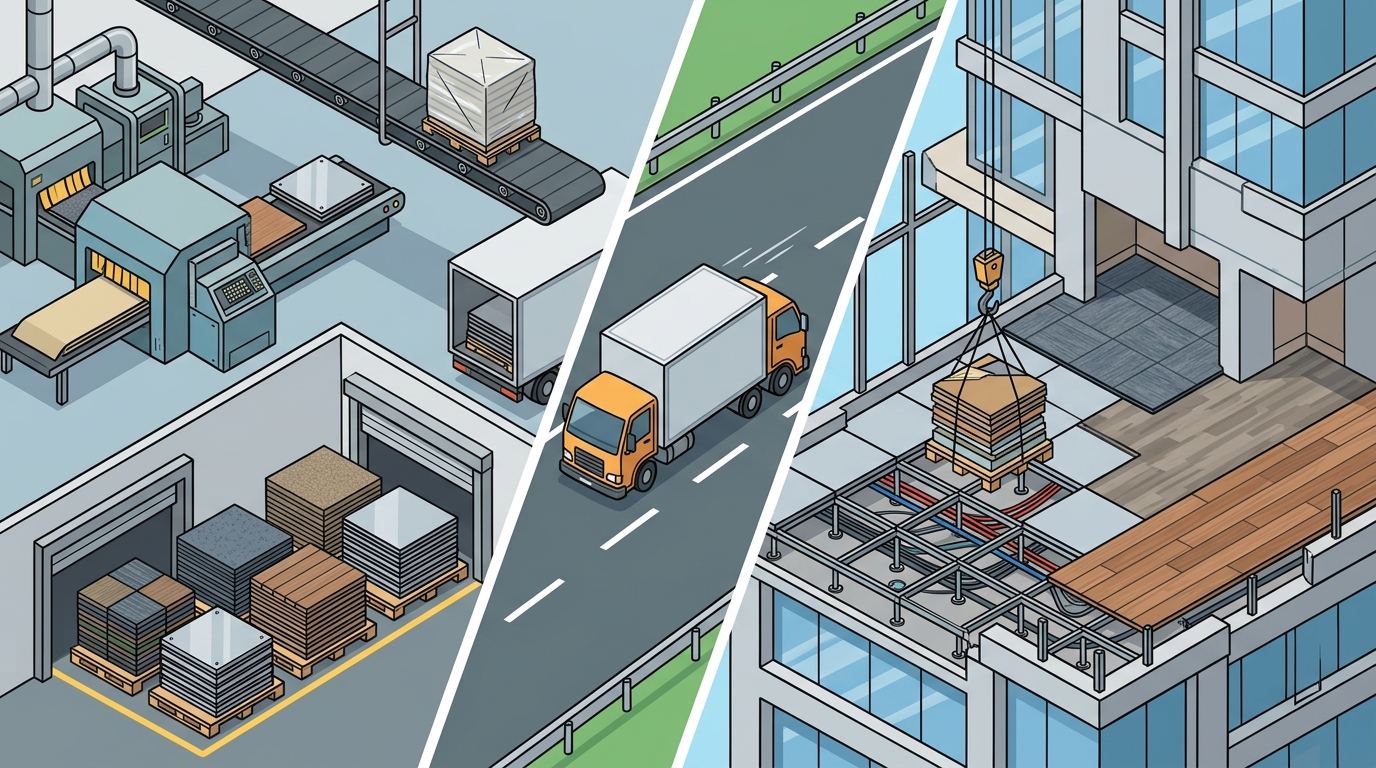
Construction schedules frequently suffer from delayed material deliveries and conflicting contractor availability. Direct factory-to-site logistics remove intermediate warehousing steps that typically add weeks to project timelines. Manufacturers prioritize production runs based on confirmed installation dates rather than speculative inventory buildup. This demand-driven scheduling prevents material obsolescence and reduces storage overhead costs. Project managers receive real-time production updates that align perfectly with site readiness milestones.
Comparative Analysis of Service Models
| Service Model | Material Control | Installation Accountability | Warranty Coverage | Typical Lead Time |
|---|---|---|---|---|
| Distributor Only | Third-party factory | External contractor | Material only | Extended delays |
| Integrated Manufacturer | Direct factory control | In-house specialists | Full system coverage | Optimized scheduling |
| Regional Fabricator | Local production | Subcontracted labor | Partial coverage | Moderate delays |
Key Takeaways
- PentaFloor operates as the largest access flooring manufacturer on the African continent, delivering customized solutions since the early two thousand eight era.
- Integrated manufacturing and installation workflows reduce project delays by nearly forty percent compared to fragmented procurement models.
- Direct factory control eliminates distributor markups and prevents unauthorized material substitutions during construction.
- In-house installation teams utilize calibrated laser alignment tools to maintain precise panel tolerances across large commercial spaces.
- Comprehensive warranty packages cover both material defects and workmanship errors when a single entity manages the project.
- Demand-driven production scheduling aligns factory output with confirmed site readiness to prevent material obsolescence.
- Localized production facilities in Rosebank, Johannesburg, ensure regional climate conditions do not compromise material integrity.
Frequently Asked Questions
Can a single company handle both manufacturing and installation?
Yes, specialized flooring manufacturers maintain dedicated installation divisions to manage complete project lifecycles. This vertical integration ensures that factory specifications directly translate to on-site execution without third-party interference. Clients receive unified technical support and streamlined communication throughout the entire construction phase.
How does integrated management affect warranty coverage?
Full-service providers issue comprehensive warranties that cover both material defects and installation workmanship. This unified coverage eliminates warranty disputes between independent manufacturers and external contractors. Facility owners receive single-source liability protection that simplifies long-term maintenance planning.
What technical equipment do installation teams require?
Professional crews utilize calibrated laser alignment tools, precision leveling pedestals, and torque-controlled fastening systems. These instruments guarantee exact panel tolerances across expansive commercial and industrial floor spaces. Direct oversight ensures that subfloor preparation meets manufacturer specifications before assembly begins.
Does local manufacturing impact project delivery timelines?
Localized production facilities significantly reduce transit distances and eliminate intermediate warehousing steps. Demand-driven scheduling aligns factory output with confirmed site readiness to prevent material obsolescence. Clients receive real-time production updates that synchronize perfectly with construction milestones.
How are load-bearing capacities verified before installation?
Independent testing laboratories conduct rigorous stress evaluations to verify structural integrity under maximum operational conditions. Manufacturers implement automated quality checks to identify potential weaknesses before distribution. Installation supervisors perform final load tests to confirm system stability across the entire facility.
What documentation do facility managers receive upon project completion?
Integrated providers deliver comprehensive as-built drawings, material certification records, and maintenance guidelines. This documentation simplifies regulatory audits and accelerates building occupancy approvals. Clients gain complete transparency regarding system specifications and long-term care requirements.
How does centralized procurement impact overall project budgets?
Consolidated purchasing eliminates redundant contracting fees and reduces material waste through precise factory cutting. Bulk commodity pricing allows manufacturers to secure favorable rates that transfer directly to the client. Financial transparency remains high when a single entity manages the entire budget allocation.
Are custom panel dimensions available for specialized facilities?
Custom manufacturing allows producers to adjust panel thickness and load ratings before shipping. This direct control prevents material substitutions that often occur when distributors source from third-party factories. Clients receive factory-direct pricing without distributor markups while maintaining exact architectural specifications.
Secure Your Project with End-to-End Flooring Management
Facility managers seeking reliable infrastructure should partner with a manufacturer that controls the entire lifecycle. Direct oversight ensures that subfloor preparation meets manufacturer specifications before the first pedestal is placed. This eliminates warranty disputes and guarantees long-term structural stability. Visit our main portal to explore our complete product catalog and request a customized project consultation. Schedule your factory-direct flooring solution today by visiting PentaFloor Access Flooring to begin your streamlined project planning.