
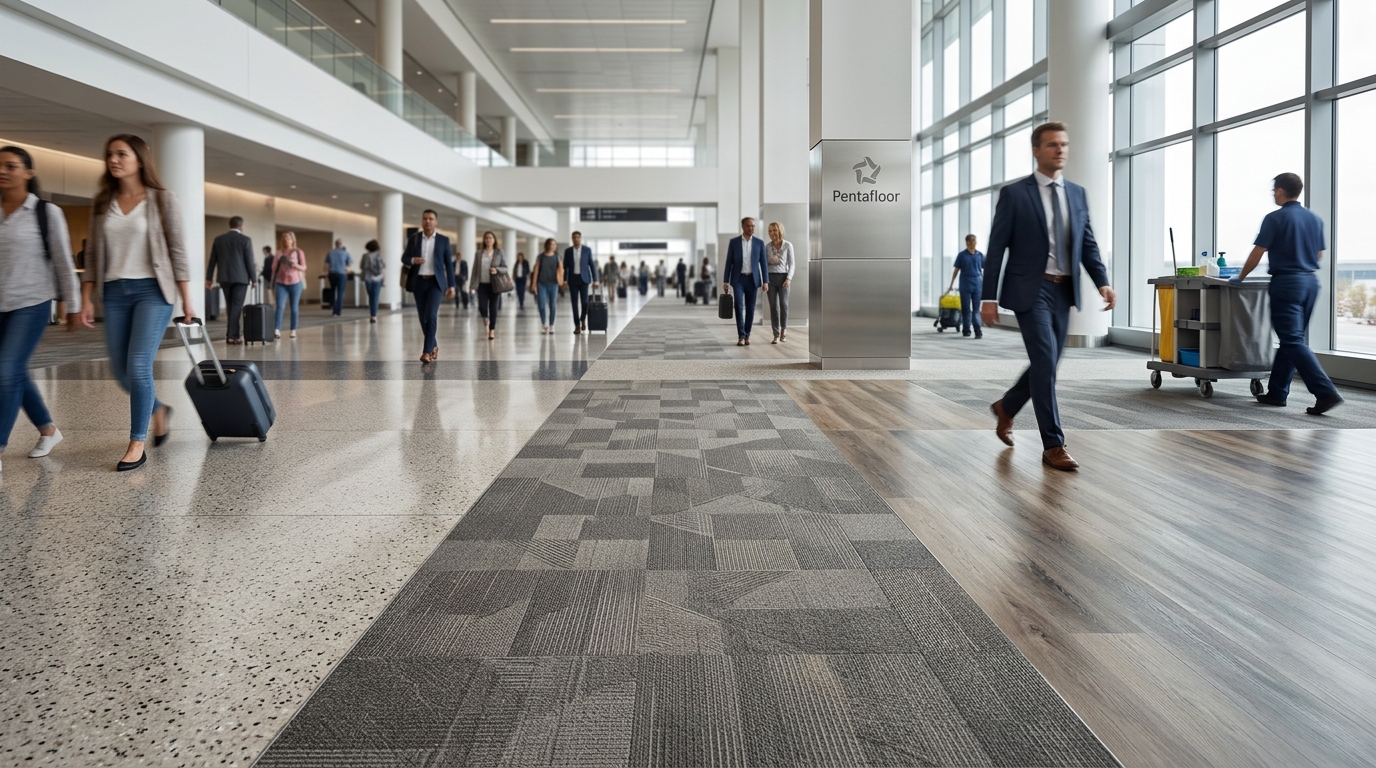
According to recent facility management reports, modern commercial buildings experience an average footfall exceeding 500 visitors daily across main corridors. Data shows that flooring degradation accounts for nearly 30 percent of annual maintenance budgets in educational and hospitality sectors. Selecting the correct surface material directly impacts operational longevity and lifecycle costs. Facility managers must prioritize durability, acoustic performance, and sustainable manufacturing standards when specifying new installations. This analysis evaluates the leading commercial flooring categories to identify the optimal solution for demanding environments.
Access Flooring Systems
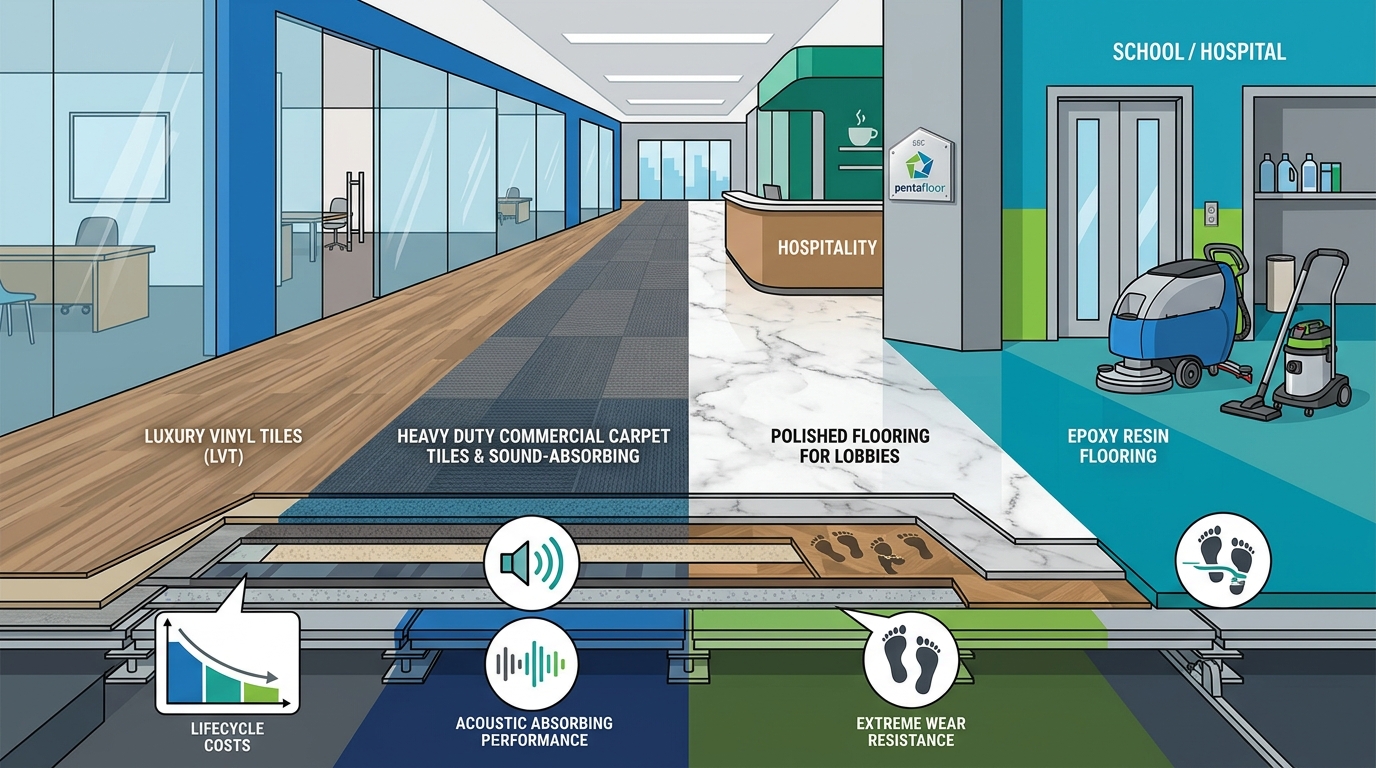
Access flooring is a raised modular system designed to conceal mechanical and electrical infrastructure while allowing rapid maintenance access. This configuration is highly preferred in modern corporate campuses and large-scale educational facilities. The elevated platform creates a continuous void beneath the walking surface. This void accommodates power routing, data cabling, and climate control distribution without disrupting daily operations. Facility managers benefit from simplified retrofits and reduced downtime during system upgrades. The modular tile design allows individual panels to be lifted without specialized tools. This feature drastically lowers long-term operational expenses. Local manufacturers now produce these systems using recycled steel substrates and high-density calcium sulfate cores. These materials meet rigorous load-bearing standards for heavy equipment and rolling carts. The surface finish can be customized to match specific aesthetic requirements. This flexibility makes the system ideal for dynamic learning environments and hospitality lobbies.
Luxury Vinyl Tile Performance
Luxury vinyl tile is a resilient synthetic surface engineered to replicate natural stone or wood grain with exceptional wear resistance. This material has gained massive adoption across hospital corridors and boutique hotel suites. The multi-layer construction includes a reinforced core, a printed design layer, and a transparent wear layer. This architecture provides superior impact resistance against dropped objects and heavy foot traffic. Maintenance protocols require only routine sweeping and damp mopping with neutral pH cleaners. The material does not require waxing or periodic stripping. This characteristic reduces labor costs and eliminates hazardous chemical exposure. Acoustic underlayments can be bonded directly to the substrate to dampen impact noise. This feature is critical for multi-story residential and educational buildings. The product line is manufactured locally to ensure rapid project delivery and consistent quality control. Facility directors frequently specify this option for high-moisture zones and food service areas.
Hard Surface and Ceramic Options
Hard surface flooring refers to non-porous materials like ceramic and porcelain that provide maximum impact resistance and hygienic sealing. These products are standard in airport terminals, hospital operating suites, and commercial kitchens. The firing process creates a dense, vitrified matrix that resists staining, scratching, and chemical degradation. Water absorption rates remain below 0.5 percent, which prevents microbial growth and structural warping. Installation requires professional substrate preparation and precise grout application. The long-term maintenance schedule involves periodic deep cleaning and resealing to preserve aesthetic appeal. These surfaces withstand heavy rolling loads and constant abrasion without showing visible wear patterns. Thermal conductivity allows seamless integration with radiant heating systems. This combination delivers consistent comfort and energy efficiency across expansive floor plans. Procurement teams prioritize these materials for projects requiring strict fire ratings and slip resistance compliance.
Carpet and Rug Solutions
Carpet and rug solutions remain a dominant choice for hospitality corridors and administrative offices. The primary advantage lies in acoustic dampening and thermal insulation. Modern carpet tiles utilize modular backing systems that allow individual replacement when stained or damaged. This approach eliminates the need to replace entire room installations. The fiber composition typically includes nylon or polyester blends engineered for stain resistance and static control. Regular vacuuming and periodic hot water extraction maintain hygiene standards and extend service life. Facility managers often select these products for executive suites and conference centers. The material absorbs impact noise more effectively than rigid alternatives. This characteristic improves occupant comfort and reduces inter-room sound transmission. Local production facilities now offer recycled content options and low volatile organic compound emissions. These specifications align with modern indoor air quality guidelines and sustainability mandates.
Sustainability and Certification Metrics
Sustainable flooring procurement requires strict adherence to environmental certification frameworks. Building rating systems evaluate material sourcing, manufacturing energy consumption, and end-of-life recyclability. Green Star certification mandates comprehensive lifecycle assessments for all specified products. BREEAM standards require transparent environmental product declarations and responsible supply chain management. ISO 14001 compliance ensures that manufacturing facilities implement continuous environmental management practices. These frameworks directly influence project approval and long-term operational efficiency. Facility directors increasingly prioritize materials with high recycled content and low embodied carbon. Local manufacturing reduces transportation emissions and supports regional economic development. The integration of sustainable flooring directly correlates with improved occupant productivity and reduced absenteeism. Procurement policies now require documented environmental impact reports before finalizing vendor selections. This shift drives industry-wide innovation in material science and circular economy practices.
| Material Category | Primary Use Case | Maintenance Frequency | Expected Lifespan |
|---|---|---|---|
| Access Flooring | Data centers, corporate offices, educational labs | Quarterly inspection | 25 to 30 years |
| Luxury Vinyl Tile | Hospital corridors, boutique hotels, retail spaces | Weekly damp mopping | 15 to 20 years |
| Hard Surface & Ceramic | Airport terminals, commercial kitchens, hospitals | Monthly deep cleaning | 30 to 50 years |
| Carpet & Rug Systems | Executive suites, conference centers, libraries | Bi-weekly vacuuming | 10 to 15 years |
Key Takeaways
- Modern commercial buildings experience an average footfall exceeding 500 visitors daily across main corridors.
- Flooring degradation accounts for nearly 30 percent of annual maintenance budgets in educational and hospitality sectors.
- Access flooring systems utilize recycled steel substrates and high-density calcium sulfate cores for maximum load bearing.
- Luxury vinyl tile features a transparent wear layer that eliminates the need for periodic waxing or stripping.
- Hard surface flooring maintains water absorption rates below 0.5 percent to prevent microbial growth.
- Carpet tile modular backing allows individual panel replacement without disrupting entire room installations.
- Local manufacturing reduces transportation emissions and supports regional economic development across South Africa.
Frequently Asked Questions
Which flooring material offers the longest lifespan for heavy foot traffic?
Hard surface flooring and ceramic options typically deliver the longest service life, often exceeding 30 years when properly maintained. These materials resist abrasion, staining, and structural warping under constant heavy use.
How do I reduce maintenance costs for high-traffic commercial spaces?
Facility managers can reduce maintenance costs by selecting modular systems like luxury vinyl tile or carpet tiles. These products allow targeted panel replacement without replacing entire floor sections.
Is access flooring suitable for educational environments?
Access flooring is highly suitable for educational environments because it conceals wiring and climate control infrastructure. The modular design enables rapid system upgrades without disrupting daily academic operations.
What maintenance schedule is required for carpet solutions in hotels?
Carpet solutions require bi-weekly vacuuming and periodic hot water extraction to maintain hygiene standards. This routine preserves fiber integrity and extends the overall service life of the installation.
How does local manufacturing impact project timelines?
Local manufacturing significantly reduces project timelines by eliminating international shipping delays. Domestic production ensures consistent quality control and rapid delivery for time-sensitive commercial installations.
Can commercial flooring meet strict fire safety regulations?
All specified commercial flooring categories meet stringent fire safety regulations and slip resistance compliance standards. These materials undergo rigorous testing to ensure occupant safety in high-density environments.
What environmental certifications should I prioritize during procurement?
Procurement teams should prioritize Green Star certification, BREEAM standards, and ISO 14001 compliance. These frameworks verify responsible sourcing, energy efficiency, and continuous environmental management practices.
Next Steps
Selecting the optimal flooring solution requires careful evaluation of operational demands, maintenance capabilities, and long-term budget constraints. Our team provides comprehensive consultation services to match your specific project requirements with the most durable and cost-effective material. Visit our About page to learn more about our manufacturing capabilities and regional service coverage. Explore our complete Access Flooring catalog or review our Luxury Vinyl collection for detailed technical specifications. Contact our project specialists today to schedule a site assessment and receive a customized proposal tailored to your facility. Begin your next commercial installation with a trusted partner dedicated to quality, sustainability, and local manufacturing excellence.