

Modern commercial construction increasingly prioritizes infrastructure flexibility. According to recent industry data, over 65 percent of new corporate headquarters now specify modular subfloor systems to accommodate rapid technology upgrades. This shift reflects a fundamental change in how facility managers approach long-term asset value. Traditional slab-based installations often struggle to support evolving digital demands without costly structural modifications. Understanding the operational differences between these systems remains critical for project stakeholders.
What Defines Access Flooring Systems?
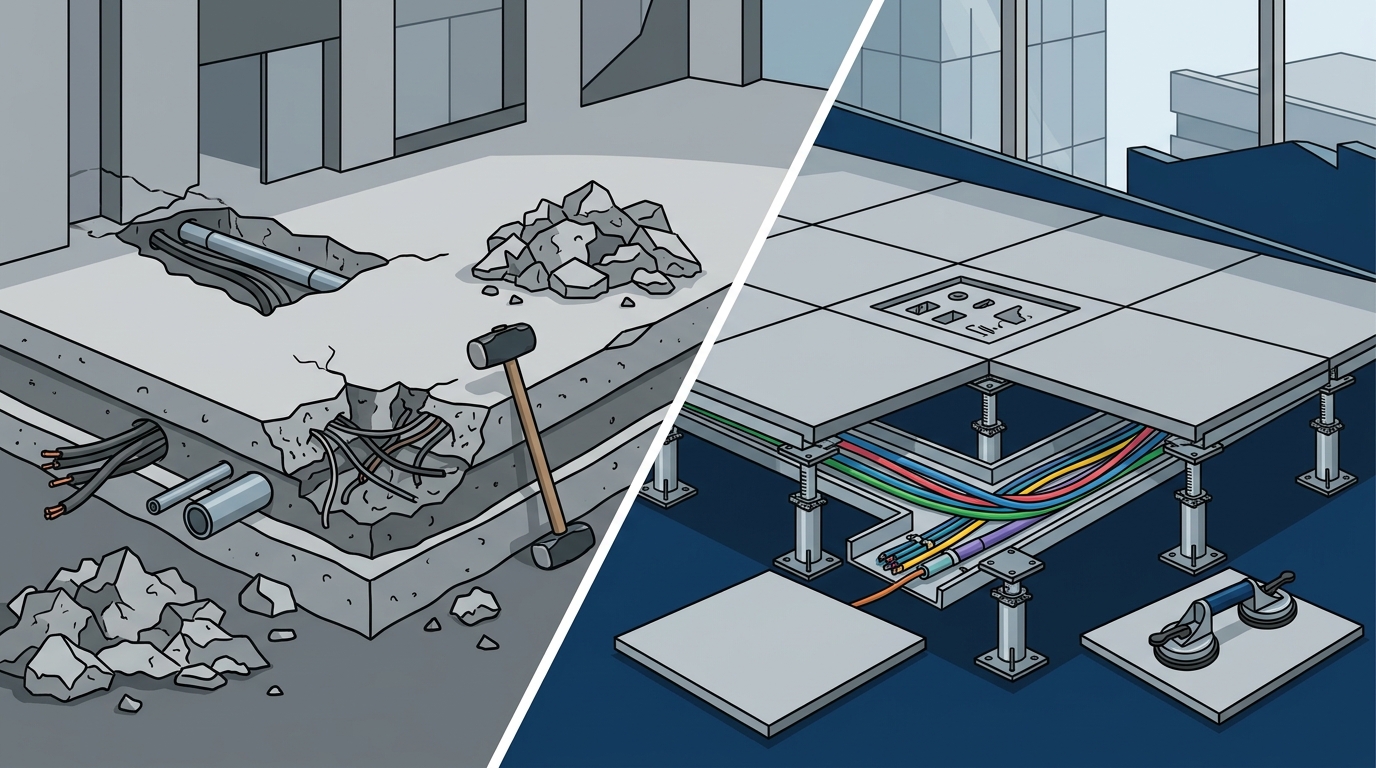
Access flooring is a modular subfloor system designed to create a raised platform for routing cables and ventilation. These systems utilize a grid of pedestals and stringers to support removable panels. Facility managers can lift individual tiles to access wiring, data lines, or HVAC ducts without damaging the surface layer. This modularity directly supports agile workspace redesigns and frequent technology refreshes. Companies like PentaFloor have manufactured locally for over 17 years, focusing on sustainable production methods and custom manufacturing capabilities. You can explore their complete product lineup by visiting the access flooring category page. The structural integrity of these systems relies on precise load distribution calculations. Engineers typically specify high-density calcium sulfate or steel cores to meet strict fire resistance and deflection standards. This engineering approach ensures consistent performance across large commercial footprints.
How Traditional Flooring Handles Infrastructure Demands
Traditional flooring is a permanent surface layer installed directly over a concrete slab or substructure. This method typically involves gluing, nailing, or floating materials like hardwood, laminate, or carpet tiles. Once installed, accessing underlying utilities requires destructive demolition or specialized trenching. Facility managers often face extended downtime when upgrading network infrastructure or replacing HVAC components. The Green Building Council of South Africa notes that sustainable building practices increasingly favor adaptable infrastructure to reduce construction waste. Traditional installations excel in residential settings or static office environments where layout changes occur infrequently. However, commercial spaces requiring frequent reconfiguration often experience higher lifecycle costs due to repeated surface replacements. The British Standards Institute confirms that flooring performance metrics prioritize long-term adaptability for high-traffic commercial zones. Decision makers must weigh initial material savings against future renovation expenses.
Installation Speed and Labor Requirements
Modular subfloor systems require specialized labor but drastically reduce overall project timelines. Technicians assemble pedestals, level the grid, and place panels in a continuous workflow. Large commercial projects often complete installation within 48 hours compared to weeks required for traditional methods. The EPA highlights that energy efficient building tools emphasize rapid deployment to minimize site disruption and operational downtime. Traditional flooring demands precise subfloor preparation, moisture testing, and curing periods. Glue-down applications require extended drying times before furniture placement or equipment installation. Carpet tile installations offer faster deployment but still require seam sealing and edge trimming. Access flooring allows concurrent work on upper-level trades like ceiling grids and lighting fixtures. This parallel workflow significantly compresses the critical path for general contractors. Project managers consistently report higher schedule certainty when specifying raised systems for complex builds.
Long-Term Maintenance and Lifecycle Costs
Maintenance strategies differ substantially between modular and permanent flooring solutions. Access flooring panels can be individually replaced if damaged by heavy equipment or liquid spills. Facility teams simply lift the affected tile, swap it with a spare, and restore full floor coverage. Traditional flooring often requires full-section replacement when water intrusion or impact damage occurs. The British Standards Institute confirms that flooring performance metrics prioritize long-term adaptability for high-traffic commercial zones. Lifecycle cost analyses consistently show that modular systems yield lower total cost of ownership over 15 to 20 year periods. Traditional installations may appear cheaper upfront but accumulate higher expenses through repeated surface replacements and utility rerouting. PentaFloor emphasizes custom manufacturing capabilities to match specific load requirements and aesthetic preferences. You can review their recognized industry achievements on the awards page. Financial controllers increasingly approve modular systems due to predictable maintenance budgets and extended service intervals.
Environmental Impact and Material Efficiency
Environmental considerations heavily influence modern procurement decisions. Modular systems generate minimal construction waste because panels are reusable and recyclable. Facility managers can relocate entire flooring systems to new buildings without discarding core materials. Traditional flooring frequently produces substantial landfill waste through removed carpet, adhesive residues, and damaged subfloor layers. The Green Building Council of South Africa notes that sustainable building practices increasingly favor adaptable infrastructure to reduce construction waste. PentaFloor operates a dedicated sustainability initiative called Pentagreen to minimize environmental impact. You can learn more about their commitment to responsible manufacturing by visiting the carpets and hard surfaces sections. Modular systems also improve indoor air quality by eliminating adhesive-heavy installation methods. Facility operators report fewer volatile organic compound emissions during and after installation. These environmental advantages align with modern corporate sustainability reporting requirements and green certification programs.
| Feature | Access Flooring | Traditional Flooring |
|---|---|---|
| Infrastructure Access | Instant panel removal | Destructive trenching required |
| Installation Timeline | 48 to 72 hours | 5 to 14 days |
| Lifecycle Cost | Lower total ownership | Higher renovation frequency |
| Waste Generation | Minimal and recyclable | High landfill contribution |
| Best Use Case | Dynamic commercial spaces | Static residential environments |
Key Takeaways
- Access flooring enables instant utility access without surface damage.
- Traditional flooring requires destructive methods for infrastructure upgrades.
- Modular systems typically complete installation within 48 to 72 hours.
- PentaFloor has manufactured locally for over 17 years.
- Modular panels are fully reusable and recyclable across projects.
- Total cost of ownership favors raised systems over 15 year periods.
- Pentagreen initiatives prioritize sustainable manufacturing processes.
Frequently Asked Questions
Can access flooring support heavy server racks and medical equipment?
Yes. Raised floor systems are engineered frameworks that support removable panels to facilitate rapid infrastructure adjustments. Engineers calculate specific load ratings to accommodate concentrated equipment weights. Facility managers typically specify reinforced pedestals and high-density cores for heavy machinery zones.
How does access flooring affect room height requirements?
Modular subfloor systems typically require 150 to 600 millimeters of clearance. Architects integrate this height into initial building designs to maintain ceiling proportions. Traditional flooring adds minimal height but restricts future utility routing options.
Is traditional flooring more cost-effective for small offices?
Small static offices often benefit from lower upfront material costs. Traditional flooring eliminates pedestal and panel expenses for single-room layouts. Facility managers should calculate renovation frequency before committing to permanent installations.
Can I mix access flooring with traditional carpet tiles?
Absolutely. Modular pedestals support standard carpet tile formats without compromising structural integrity. Facility teams can replace worn carpet sections while preserving the underlying support grid. This hybrid approach maximizes aesthetic flexibility and functional durability.
How long do access flooring systems typically last?
Properly maintained modular systems routinely exceed 25 years of service. Panel replacements occur only when surface wear reaches functional thresholds. The underlying support grid remains fully operational throughout the building lifecycle.
Does access flooring improve acoustic performance in open offices?
Yes. Raised systems allow acoustic underlay installation beneath panels to reduce sound transmission. Facility managers often specify sound-dampening cores to meet modern workplace noise standards. Traditional flooring relies on separate acoustic mats to achieve similar results.
What warranty coverage typically applies to modular systems?
Manufacturers generally provide 10 to 20 year structural warranties on pedestal and panel components. Coverage typically excludes surface wear from improper maintenance or unauthorized modifications. Facility managers should review specific warranty terms before finalizing procurement decisions.
Next Steps for Your Project
Selecting the optimal flooring solution requires careful evaluation of your facility layout, technology roadmap, and long-term operational goals. Modular subfloor systems deliver unmatched adaptability for dynamic commercial environments. Traditional flooring remains a viable option for static residential or low-turnover spaces. Contact the PentaFloor team to schedule a comprehensive site assessment and receive customized specifications tailored to your exact requirements. Visit https://pentafloor.co.za/ to explore their complete product catalog and request a detailed project consultation today.