
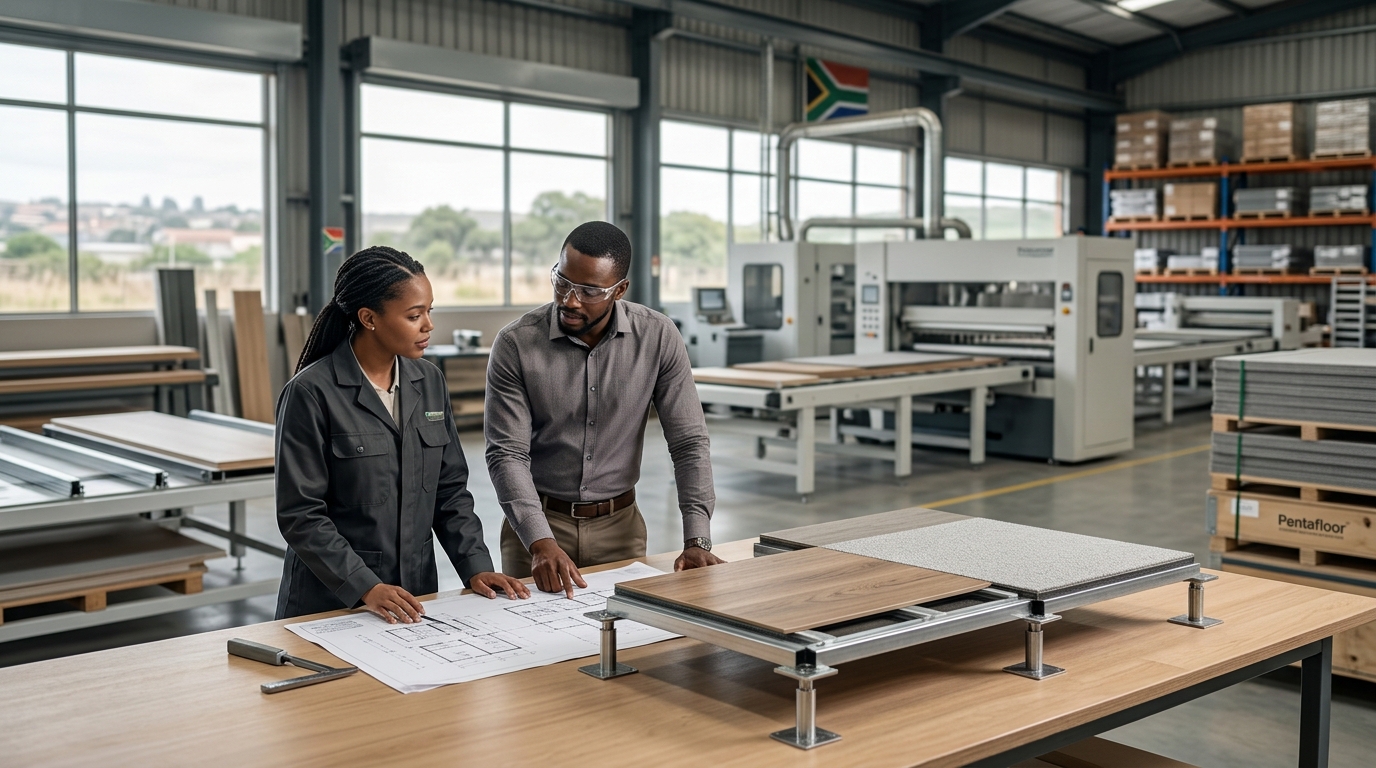
The South African construction sector has experienced a measurable shift toward localized production over the past decade. Recent industry reports indicate that domestic manufacturing output for commercial building materials has increased by approximately eighteen percent since twenty twenty one. This growth directly supports large-scale infrastructure projects and commercial fit-outs across major metropolitan hubs. Contractors who control their own production lines can bypass import delays and maintain strict quality oversight. Understanding how these vertical integration models operate remains essential for facility managers and procurement officers.
The Shift Toward Localized Manufacturing in South Africa
Commercial developers increasingly prioritize domestic suppliers to mitigate currency fluctuation risks. Localized production eliminates lengthy shipping windows and reduces customs clearance bottlenecks. Companies like PentaFloor have established dedicated manufacturing facilities within Johannesburg to serve national demand. This geographic concentration allows rapid response times for urgent commercial renovations. Procurement teams benefit from direct communication with production engineers during the specification phase.
Domestic factories also adapt faster to regional climate variations and building code requirements. Materials engineered for high humidity or extreme temperature swings perform reliably when tested locally. The industry reports consistently highlight reduced lead times as a primary advantage of homegrown production. Facility managers no longer need to forecast inventory months in advance. Shorter supply chains translate directly into predictable project timelines and controlled budgets.
Defining Access Flooring and Its Industrial Applications
Access flooring is a raised structural system designed to conceal mechanical and electrical infrastructure while allowing rapid maintenance access. This specialized category dominates data centers, corporate offices, and healthcare facilities across the region. The modular panel design supports heavy server loads while maintaining precise height tolerances. PentaFloor manufactures these systems using locally sourced steel and composite substrates. The modular architecture enables technicians to lift individual panels without disrupting ongoing operations.
Modern commercial buildings require flexible routing for fiber optic cables and power distribution networks. Raised systems provide unobstructed pathways beneath the walking surface. Contractors who fabricate these panels in-house can adjust load ratings and fire resistance specifications on demand. The ability to modify panel thickness and core composition ensures compliance with evolving safety regulations. Facility operators gain long-term flexibility when future technology upgrades become necessary.
How Local Manufacturers Control Quality and Supply Chains
Vertical integration is a business model where a single entity oversees raw material processing, final assembly, and direct distribution. South African manufacturers maintain rigorous testing protocols at every production stage. Quality assurance teams conduct load bearing assessments and slip resistance evaluations before shipment. Award winning production facilities implement automated cutting systems to minimize material waste. Consistent output reduces the risk of project delays caused by substandard batches.
Domestic factories also maintain strategic inventory buffers for critical components. This operational strategy protects commercial clients from global shipping disruptions and port congestion. Procurement managers appreciate the transparency that comes with direct factory oversight. Every batch carries traceable documentation that simplifies compliance audits. The combination of localized production and strict quality control creates a highly reliable procurement pathway.
Comparing Domestic Production Versus Imported Alternatives
Supply chain resilience refers to the capacity of a distribution network to maintain consistent delivery schedules despite external economic disruptions. Domestic manufacturers typically offer faster turnaround times and customizable specifications. Imported alternatives often arrive with extended lead times and limited modification options. The table below outlines the operational differences between these two procurement strategies.
| Procurement Strategy | Lead Time | Customization Capacity | Compliance Alignment |
|---|---|---|---|
| Domestic Manufacturing | Two to four weeks | Full specification adjustments | Direct SABS alignment |
| Imported Alternatives | Eight to twelve weeks | Limited modification options | Requires third-party verification |
Commercial projects with aggressive deadlines consistently favor local fabrication. The ability to request expedited production runs eliminates unnecessary holding costs. Facility managers can adjust order quantities without facing minimum batch restrictions. Domestic suppliers also provide technical support during the installation phase. This collaborative approach reduces on-site errors and accelerates project completion.
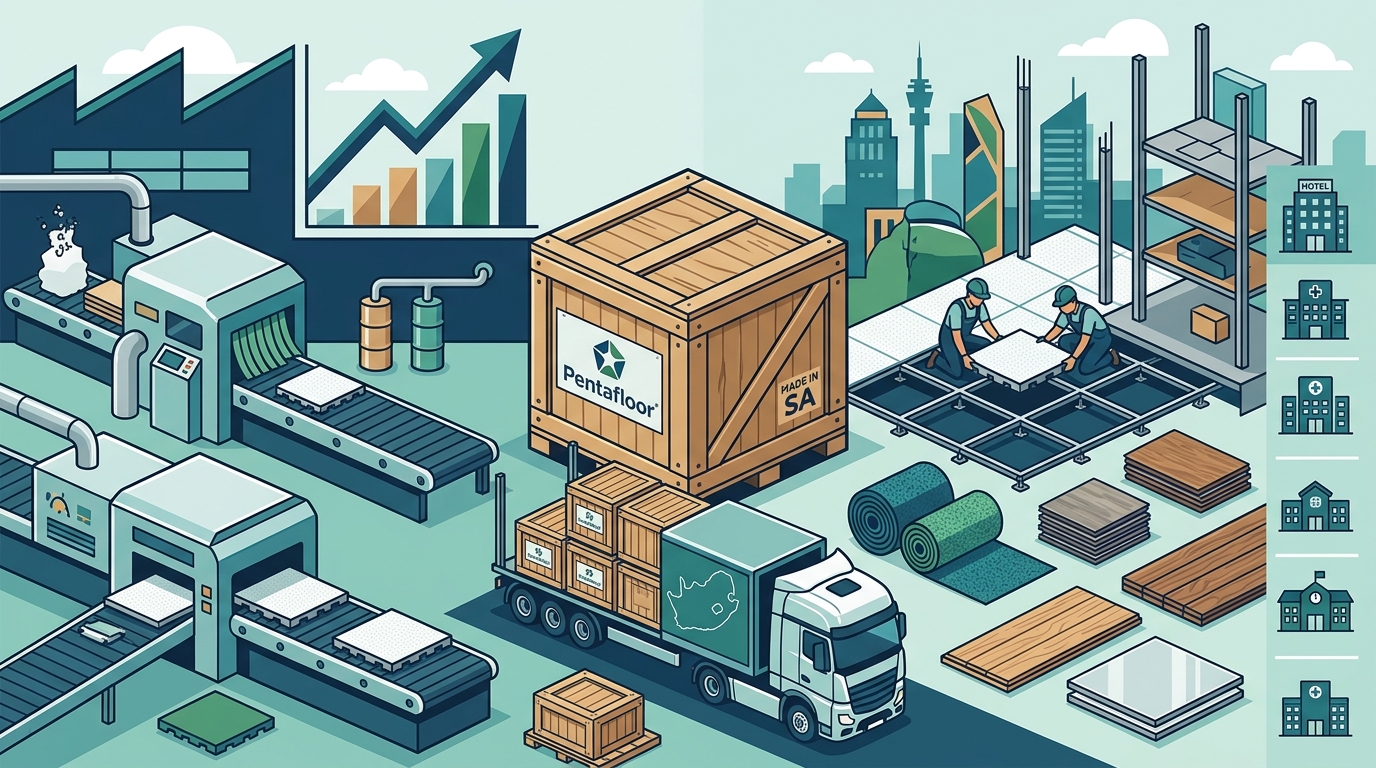
The Role of Custom Fabrication in Commercial Projects
Modern commercial environments demand specialized flooring solutions that address unique operational requirements. Hard surfaces, luxury vinyl, and engineered oak options now feature locally developed wear layers. Carpet tile systems incorporate stain resistant treatments tailored to high traffic corridors. Manufacturers adjust backing compositions to accommodate underfloor heating installations. These technical adaptations ensure optimal performance across diverse building types.
Custom fabrication also extends to acoustic dampening and fire retardant specifications. Healthcare facilities require antimicrobial surface treatments that meet strict hygiene standards. Corporate campuses prioritize acoustic performance to maintain productivity in open office layouts. Local engineers collaborate directly with project architects to match aesthetic and functional requirements. The resulting installations deliver long term durability without compromising design intent.
Key Takeaways
- Domestic manufacturing output for commercial flooring has grown by approximately eighteen percent since twenty twenty one.
- Local production facilities maintain average lead times of two to four weeks for standard commercial orders.
- Vertical integration eliminates import delays and reduces customs clearance bottlenecks for large projects.
- South African manufacturers operate dedicated facilities within Johannesburg to serve national demand.
- Custom fabrication capabilities allow precise adjustments to load ratings and fire resistance specifications.
- Quality assurance protocols include automated cutting systems and batch traceable documentation.
- Commercial clients benefit from direct technical support during the installation and commissioning phases.
Frequently Asked Questions
Do South African flooring contractors actually manufacture their own materials?
Yes, several established South African companies operate dedicated manufacturing facilities that produce access flooring, hard surfaces, and carpet systems domestically. These operations maintain full control over raw material sourcing, panel fabrication, and quality testing procedures.
How does local manufacturing impact project delivery timelines?
Domestic production typically reduces lead times to two to four weeks compared to eight to twelve weeks for imported alternatives. Shorter shipping windows eliminate customs delays and allow contractors to schedule installations with greater precision.
What quality standards do local manufacturers follow?
South African factories align their production processes with national building regulations and international safety benchmarks. Routine load bearing assessments and slip resistance evaluations ensure every batch meets commercial specifications.
Can local manufacturers accommodate custom size requirements?
Domestic facilities routinely adjust panel dimensions, core compositions, and surface treatments to match specific architectural drawings. Custom fabrication eliminates the need to force standard sizes into non standard spaces.
How do local suppliers handle urgent commercial renovation requests?
Manufacturers maintain strategic inventory buffers for critical components and offer expedited production runs for time sensitive projects. Direct factory communication enables rapid specification adjustments without compromising structural integrity.
What flooring categories do South African manufacturers currently produce?
Domestic factories currently produce access flooring systems, luxury vinyl sheets, engineered oak, carpet tiles, and specialized hard surface solutions. Each category undergoes localized testing to ensure optimal performance under regional climate conditions.
Is it cost effective to choose locally manufactured flooring?
Local production eliminates import duties, reduces shipping expenses, and minimizes currency exchange risks. The resulting cost structure typically delivers better long term value for commercial and institutional projects.
Next Steps for Commercial Flooring Procurement
Facility managers and procurement officers should evaluate their upcoming project specifications against domestic manufacturing capabilities. Direct consultation with local production teams ensures accurate material selection and precise installation scheduling. Contact the manufacturing team today to request detailed technical specifications and project consultation. Early engagement with domestic suppliers guarantees optimal material allocation and streamlined project execution.